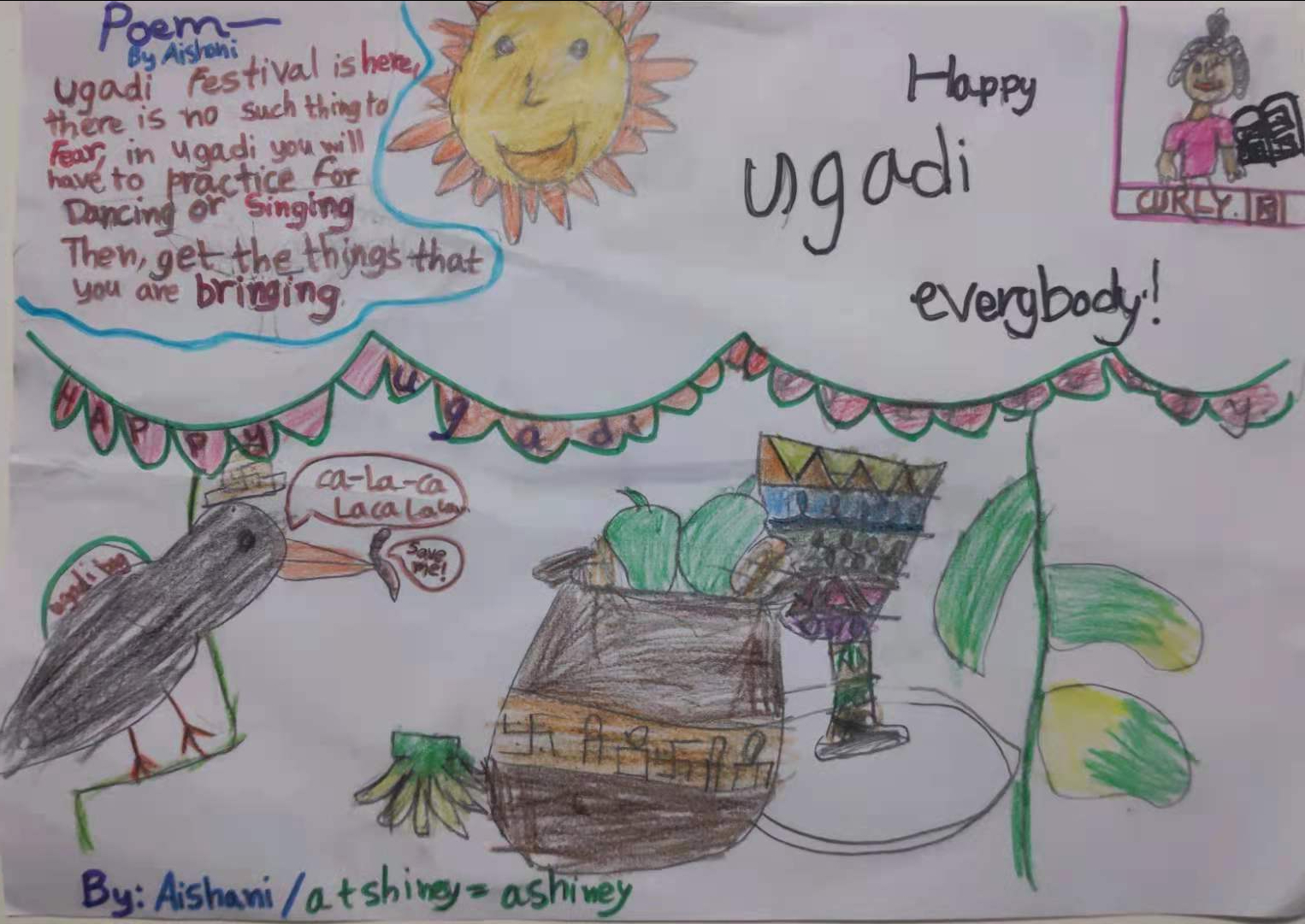
Whilst living in Shanghai, I have been asked by folks here at various occasions on when does India celebrate its New Year. Do we have something called as an Indian New Year? Well, I tell them its complicated. We have several new years in different provinces of India, and we don’t have one single New year festival. Why is it complicated? Why so many different new year festivals? On this auspicious occasion of Ugadi festival, I try to dig deeper.
I found this on wiki; a rather concise explanation of the various new year dates in India: “Observance is determined by whether the lunar calendar is being followed or the solar calendar. Those regions which follow the Solar calendar, the new year falls on Baisakhi in North and Central India, Rongali Bihu in Assam, Puthandu in Tamil Nadu, Vishu in Kerala, Pana Sankranti in Odisha and Poila Boishakh in Bengal in the month of the calendar, i.e., Vaishakha. Generally, this day falls during 14th or 15th of the month of April. Those following Lunar calendar consider the month of Chaitra (corresponding to March-April) as the first month of the year, so the new year is celebrated on the first day of this month like Ugadi in Andhra Pradesh, Telangana, Karnataka and Gudi Padwa in Maharashtra.“.
In this article, I focus on Ugadi – a new year festival celebrated as Ugadi in Andhra Pradesh & Telangana, Yugadi in Karnataka, Gudi Padwa in Maharashtra, the Hindu Konkani’s celebrate this day as Samsara Padavo. Ugadi is the first day of the Hindu Lunisolar calendar month of Chaitra. Lunisolar (to be honest I saw this term just today, otherwise I thought it was just Lunar) is calendar whose date indicates both the Moon phase and the time of the solar year. Derived from Sanskrit words yuga (age) and ādi (beginning), it signals the New Year day: “the beginning of a new age”.
Ugadi, apart from marking the start of a new year, also brings in a lot of life perspective. The culinary choices surrounding this festival is rather unique & interesting:
- Jaggery – traditional non-centrifugal cane sugar with its “sweet” taste symbolizing “Happiness”.
- Neem – Leaves from Indian Lilac tree with its “bitter” taste symbolizing “Sadness”.
- Chilly – with its “spicy” taste symbolizing “Anger”
- Tamarind – Brown pod like fruits with its “sour” taste symbolizing “Disgust”
- Salt – with its regular “salty” taste symbolizing “Fear”
- Raw Mango – with its “tangy” taste symbolizing “Surprise”
The first 5 emotions reminded me of the fantastic animated movie “Inside out”. If you haven’t seen this movie, you definitely should; its suitable to audience of all ages. The way they have portrayed how these 5 emotions control the brain “headquarters” is simply incredible. I wonder why they missed out the “surprise” element in that movie. When I was talking to my daughter about this 6th element, she mentioned probably it’s because surprise could end up being one of the first 5 elements; A “happy” surprise, or a surprise that makes one angry, for example. Made sense.
Ok, coming back to Ugadi, in Andhra Pradesh & Telangana they prepare Ugadi Pacchadi, a unique concoction of the above 6 ingredients to welcome the new year. A reminder that life remains a unique blend of all these emotions. According to Vasudha Narayanan, a professor of Religion at the University of Florida: The pacchadi festive dish symbolically reminds the people that the following year – as all of life – will consist of not just sweet experiences, but a combination of sweet, sour, salty, and bitter episodes. Just as the different substances are bound together, one is reminded that no event or episode is wholly good or bad. Even in the midst of bitter experiences, there are sweet moments. One is also reminded that the experience of taste is transitory and ephemeral; so too, is life, and one has to learn to put pain and pleasure in proper temporal perspective.
My memories of this festival, growing up in Mangalore, is about having family wide traditional lunch on banana leaf with various delicacies, wearing new clothes and seeking blessings from elders . This was the time to buy new clothes & household stuff, get together of the extended family and enjoying the feast together. Over the years, I think we have forgotten the rich significance that this festival brings along, and let it silently slide into becoming one of the many smaller festivals of India. In this era of rampant capitalization in modern times, buying something new on Ugadi isn’t a novelty; we buy new stuff all the time. We feast more than we should, although not exactly in the traditional social & culinary sense.
Another interesting aspect of Ugadi that I wasn’t aware of was about giving donations & charity to the needful. Apparently, medieval texts and inscriptions recorded major charitable donations to Hindu temples and community centers on this day. I am not sure how much artistic skills we have lost over the years in the art of drawing Rangoli’s (Colorful patterns on the floor). There is so much more to Ugadi than the feast itself. Come on, lets explore more and hope to go back to our roots and follow the age-old traditions as much practically possible, simplistic yet wholistic. Let’s welcome the new year with open hearts & thoughts, deep respect to the rich age old tradition.
I wish everyone a very happy Yugadi festival! Yugadi Habbada Shubhaashayagalu – ಯುಗಾದಿ ಹಬ್ಬದ ಶುಭಾಶಯಗಳು (“Greetings for the festival of Yugadi“).
Discover more from Keep it simple, stupid.
Subscribe to get the latest posts sent to your email.
 Keep it simple, stupid.