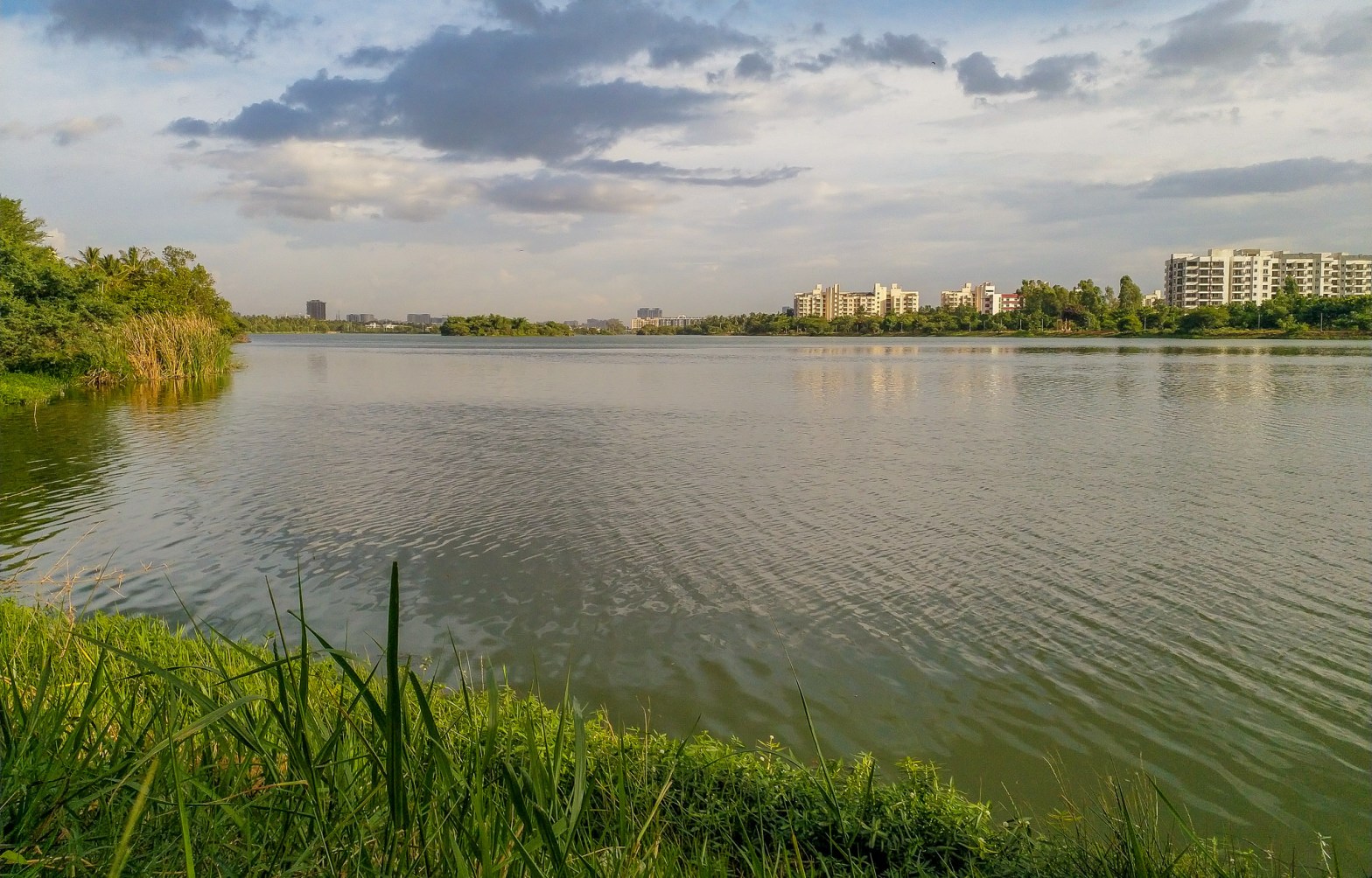
When we see a beautiful and well-maintained lake, the first thing that comes to mind is that the local government and civic agencies are doing a great work. No doubt they are, but what we don’t realize is that there are also a lot of volunteering organizations that get their hands dirty to set and get the agenda moving on a daily basis. Often at times when the civic body representatives change, and often dealing with people having mixed agendas. I had a great privilege this past weekend to meet the leader of one such organization, Dr. Annapurna Kamath, who obliged for a “walk in the park” session with school kids at the Jakkur Sampigehalli Lake on a Sunday morning.
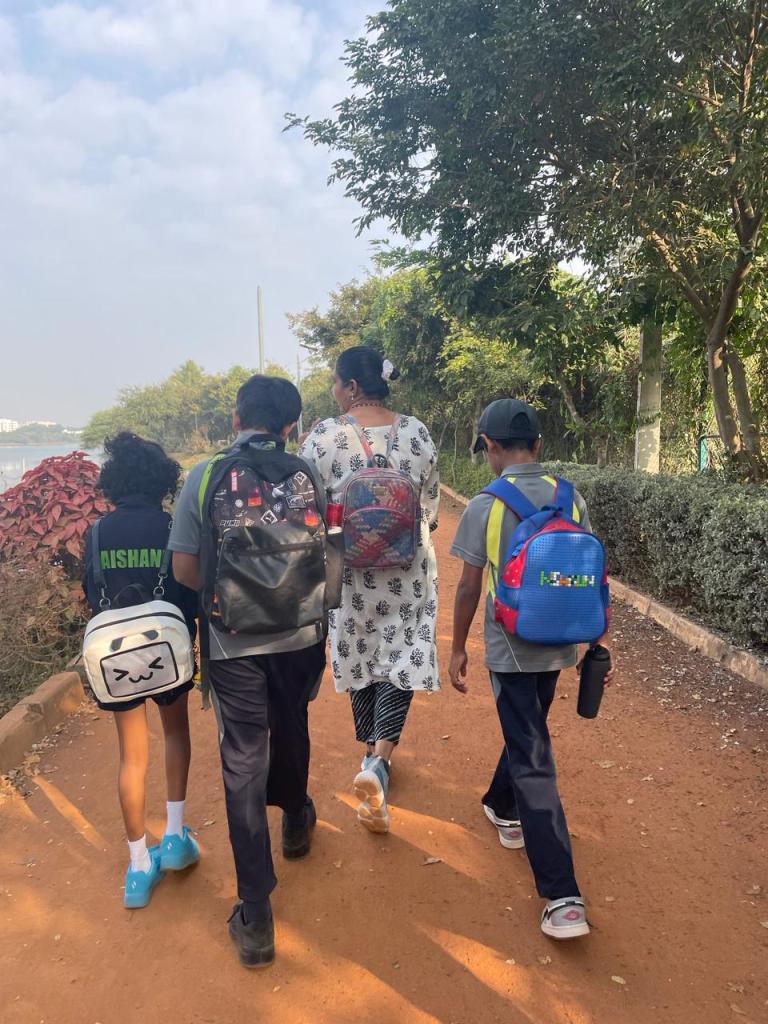
As a parent of one such kid, I got chance to witness firsthand the passion and the efforts that her organizations Satya Foundation and Jalaposhan have been putting around since 2007. My initial plan, however, was to just drop my daughter at the gathering and go for a run around the lake. But then within few minutes of engagement, Annapurna Madam captivated us all with her rich knowledge of history, Geography and what not, I decided to stay back and just soak in this “wealth” of information. The next 3-4 hours that we spent here along with rest of the audience was probably one of the most meaningful and enriching experiences of our lives. There were a lot of learnings, a lot to ponder, and again that search for purpose and calling in life.
Nothing happens overnight, she and her team have been at it for decades long to give us this spectacular place to run, walk, enjoy the lakeview, its associated flora/fauna, and simply unwind. The whole session was way more informational than the classroom sessions on any of these topics. I haven’t had such an overdose of knowledge ranging from psychology, history, geography, science, government organizations, in such a short time span. I would like to share this experience with all of you so that we all are aware what goes behind the scenes for such a delightful lake experience.
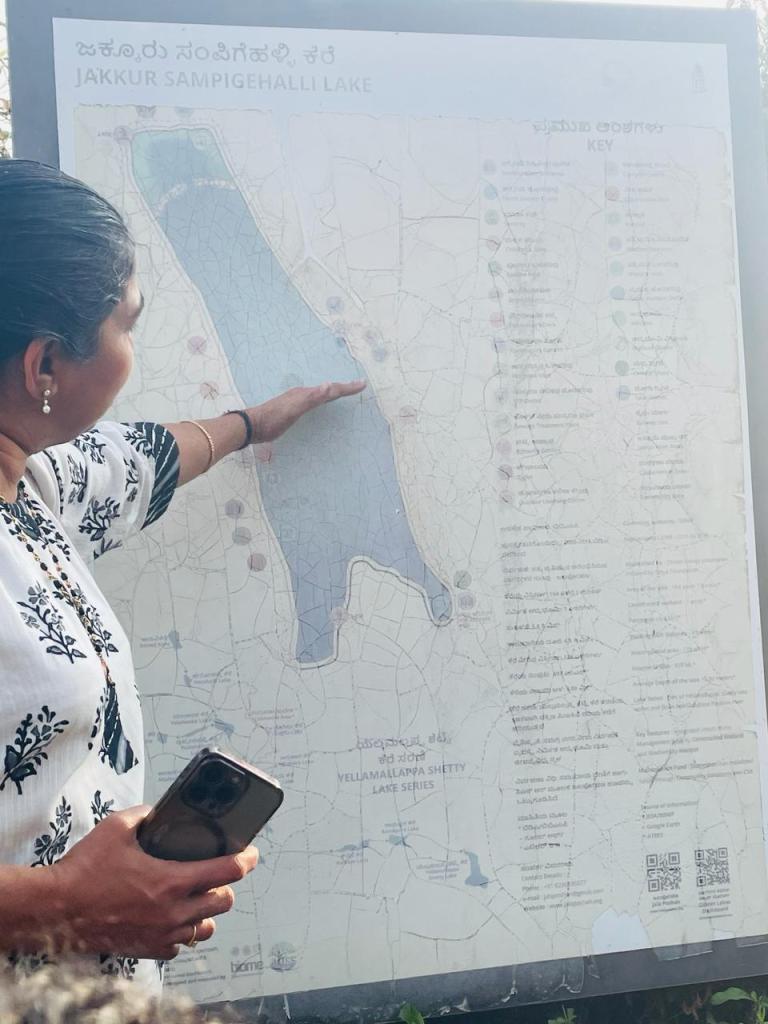
Water bodies of Bengaluru: Apparently, and this was new to me, Bengaluru was once a city of 1000 lakes! Currently we just about have 200 out of which many are still struggling. Most of the constructions in Bengaluru have taken place on lakebed. Majestic, the city’s major bus transportation hub was built on Dharmabuddhi Lake. Annapurna Madam asked everyone: What are the rivers of Bangalore? All that we could muster was Cauvery River. But, as she rightly pointed out, it’s not actually a river of Bangalore. Yes, it passes through Bengaluru, but it originates in Coorg. Bengaluru has its own rivers like Vrishabhavati, Arkavathi, Dakshina Pinakini, Uttara Pinakini. Apparently, there were 6 rivers originating from Nandi Hills, from a natural spring source. Dakshina Pinakini originates from Nandi hills and flows through Hosur, Tamilnadu. YeleMallapppa Shetty Lake series was part of this river, and Jakkur Lake was part of this lake series. A very good map of YeleMallapppa Shetty Lake series has been put up just at the entrance of the Lake. There are other prominent lakes such as Kalkere Lake and Yele Mallappa Shetty Lake in this lake series.
Environment protection movement is nothing new: She also told us interesting story about Yele Mallappa Shetty Lake where Mallappa Shetty, a local shopkeeper selling betel leaf (called “Yele” in Kannada) used his personal money to protect the lake. In general, sustenance was a way of living in villages. Everything was used from local sources, locally made and disposed naturally. Only with the advent of Urban sophisticated crowd, did the plastics and other packaged foods came into existence here, and lead to pollution and damage that we now need to work on. So, in general, the idea of protection was nothing new, the villagers have been doing it since ages, only now we are giving it fancy names. It was shocking to know that the sophisticated urban class does most of the damage to the nature and now calls on people to take up environment protection.
The Wonderful Lake Dwellers: To do bird watching, one doesn’t need to drive all the way to Ranganathittu Bird sanctuary near Mysore. The Jakkur lake hosts some beautiful birds like Cormorant, Coot, Heron, Pelican, Painted Storks, Purple Moor Hen (this looked stunning), Stilts, Black headed Ibis, Glossy Ibis, and Of course lot of Egrets. It’s a bird lover’s paradise. I didn’t realize we were living so close to this amazing habitat. A nice island has been created for the birds to nest away, getting their much-needed share of privacy. There is a wetland area, catering to the needs of birds that live in shallow waters. The wetland area also has weeds & algae that act as a natural water filter, and the cleansed water then flows on to the river, a great ecosystem indeed.
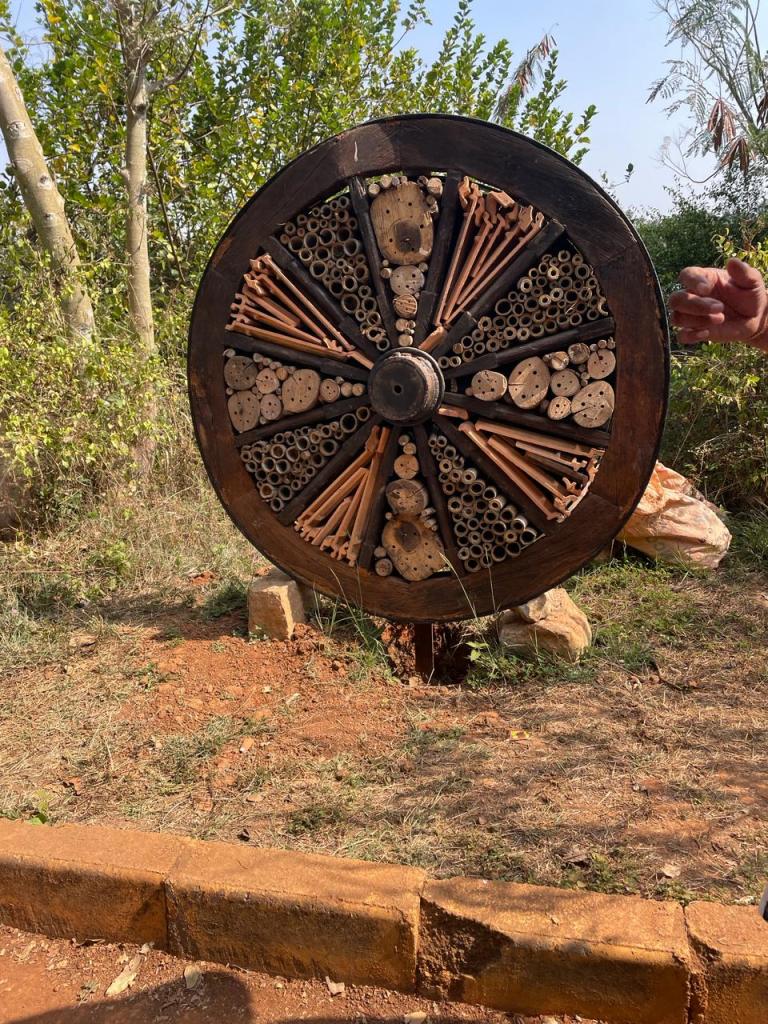
It was truly a delightful experience watching those gorgeous birds (I don’t have any pictures of birds, highly recommend visiting the lake and watching them live, it’s quite some experience). Apart from the birds, there are lots of protection schemes for Solitary bees (the bees who don’t produce honey, and hence deemed not useful for humans). There was a nice Bee “House” designed. They are planning to build Bee “Hotel” and bee forests.
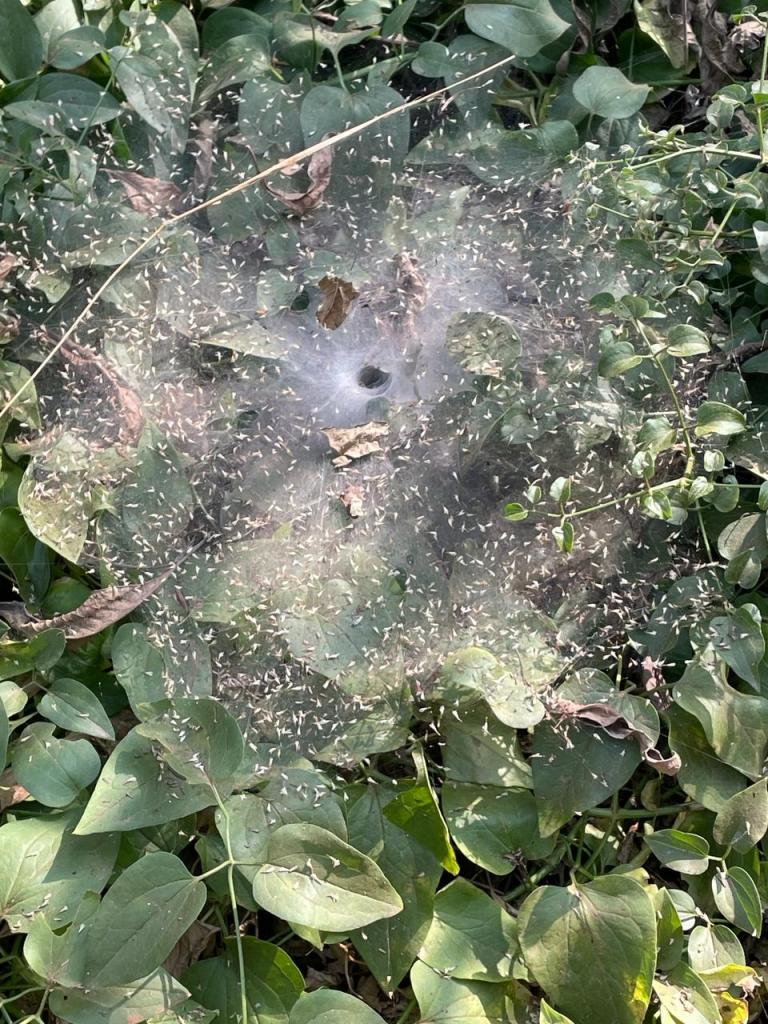
We spotted lots of funnel spiders along the walk.
Apparently, there are several snakes around too. They come out probably only during the later hours when temperature is cooler and no people around.
Biodiversity: Honge tree (Pongamia pinnata), a native is found in abundance. There was this interesting tree called Subabul (Leucaena leucocephala), apparently this was brought to Bangalore from desert region. She explained beautifully how there are these native trees, local to the geography, and then there are non-native ones, which were brought to Bangalore from other parts, mostly by Britishers. The Subabul tree grows in the desert, and hence has tendency to reproduce more. The seeds fall in all corners, and usually in the desert terrain the hit ratio is quite low. However, when it falls into a fertile land like that of Bangalore, it has tendency to over grow, and “invade” other trees. Invasive trees will destroy the local vegetation. Hence, it’s very important for everyone to refrain from getting seeds of other geography without understanding its impact. This, as she put in, happens when humans think they are “god” and try to play with nature. There are non-native exotic trees that don’t necessarily invade but are difficult to sustain and hence must not be planted. In any case, when in doubt, please refrain from moving seeds from one geography to another. A good article on Biodiversity in Bengaluru can be found at: https://images.citizenmatters.in/wp-content/uploads/sites/14/2021/09/20174205/Reporters-Manual-Bengaluru-Biodiversity_Final.pdf
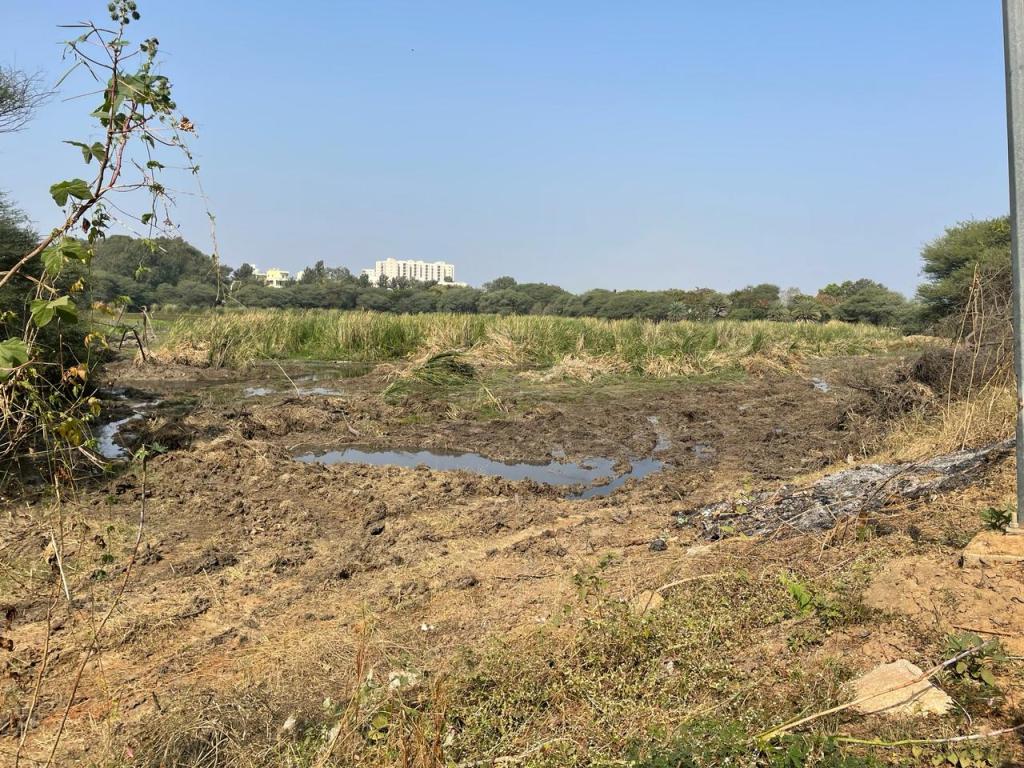
Working with the government: As we passed by a stream that looks more of a drainage than a healthy source of water for the Lake, she put forth her next interesting thought. There are two important civil concepts that comes as part of a nation state: Duty and Rights. Every citizen is bound by duties, and every citizen enjoys rights. She mentioned that over the years we have conveniently forgotten our duties and only focus on our rights (Schools as well predominantly focus on rights more than duties). She then told a beautiful statement “Only duty will yield the right“; If we don’t perform our civic duties, the state won’t be in a state where we can “exercise” our rights. As part of the civic duties, it’s important to not just criticize the government and local civic bodies, but to work with them. Help them to help us. As she mentioned, if people approach the government officials in a nice attitude, not being cocky about it, they are more than willing to oblige. If there is a way you can help on the local issues, go speak to the officials with humility, right attitude and workable solution. Let them do what general public cannot do (like enforcing law and order or levying penalties, etc). Her team has worked with several government organizations like BBMP, BDA, LDA, Fisheries, forest department, BWSSB, and leaders like the local MLA, MP, corporators and found that it’s definitely possible to co-work with these groups and achieve meaningful results. In summary, her point was to stop complaining and just do whatever little we could, as a resident of any given locality.
Co-existence of all stakeholders: When kids asked why there was no boating in this lake, she replied that this was a conscious decision they took as a group. Mainly this was to provide some privacy to the birds, who could build nests and not be bothered by human nuisance. However, they had to overcome after multiple local residents pushed for boating. It took them some time to reason. Instead, the residents are offered different experience; there is a nice walking/jogging track around the lake, nice playground park, where people of all ages can use equipment’s. Traditional Indian games can be played in open space, and a quality time can be spent by everyone. Likewise, there are fishermen who live by the produce of this lake. However, they take only for their need, not for their greed. Infact, the local fisherman, Jockim has been instrumental in the revival of Jakkur lake, there is a nice article at Mongabay: https://india.mongabay.com/2021/04/the-story-of-jakkur-lake-sets-an-example-for-inclusive-rejuvenation-projects/, please do read. The agenda of peaceful co-existence, socioecological mix of human intensive and ecological needs is a must, it has to be a balanced approach and not extreme at any ends. It needs to ensure all the stake holders, the local residents, flora and fauna, the farmers, grasscutters, cattle raisers, government, fishermen, etc. are happy to the best possible extent. Live and let live, is the philosophy, it seems.
Taking sustenance to next level: Self sustenance seems to be the new end goal. At the Jakkur lake, the Jalaposhan group has introduced the concept of Community gardens – a permaculture towards sustainability. An ongoing experiment to see if the unused lake area could be used to produce crops in an ecological way, for the community. Drip irrigation using terracotta pots, dig the mud and place the porous pot inside the earth bed.

The garden is designed in a keyhole structure, small and accessible from all sides. The team also wants to do Poly cropping, using the same land to cultivate different crops, this way different nutrients are taken and released into the mud, an approach that can keep pesticides away. Simple, yet impactful changes. The project, however, didn’t take off due to the covid crisis, but they are eagerly working to revive the same. They are also working towards creating Earth Garden, water garden and forest garden, unique ecological hotspots. Lot of projects on the runway waiting to take off. Help in all forms will be generously accepted.
Volunteering & other Activities: The entire ecosystem here is vitalized thanks to the efforts of the volunteering groups. Annapurna madam rightly says, “We don’t want to place a guilt knife on people and demand them to come for volunteering work, it should come from their own desire to help“. She understands that the work will be effective only if it’s done from the heart, with a passion and purpose, not just for the heck of it. There is a lot of work still to be done, continuous maintenance, and work on the newer projects. Every Saturday, the team meets up for Shramadhana (Donation of Labor) between 7:30am to 9:30am and they willingly accept people to join this activity (regulars are much preferred). They also have artists performing every second and fourth Sundays. There is a Kale Ale (Art wave) every third Sunday. They also tie up through Prakriti Paatshaalas with universities and intellectuals, the ones who engage in scientific social responsibility. They don’t do anything just based on their feelings, everything is well thought through, discussed and approached in an intellectual and scientific way. All of this work above needs active participation from the community. For people in technology who would love to help but don’t fancy getting their hands dirty, they can help by running their social media campaigns, their Instagram handle, managing their websites producing promotional reels and posts, etc. Together we can, and together we will, is the motto.
Taking God’s help: Towards the end of the walk, we reached Kalyani, the auspicious pond, normally built around temples. This one here, is used for the immersion of Lord Ganesha idol during the festival. A nice story here: Farmers used to keep aside small amount of clay during the harvest season. Then comes monsoon season, after which comes Ganesh festival, where they make idol from this clay, and then immerse it in pond. A ritual to thank God for the good harvest this season and to seek blessings for a good yield next season as well. As she mentioned, our ancestors (the ones that wrote Hindu scriptures) were smart folks, that they associated a lot of flora and fauna to God. Humans, by their true selfish nature, are afraid of curse and bad omen. Once a fear is generated that culling this tree or slaying this animal leads to ill fate, humans will avoid doing it. Thus, lot of trees such as Ashvattha (Ficus Religiosa), Neem (Azadirachta indica), Banyan tree was made sacred and conserved. These are also called “keystone” species, as they are vital to the local ecology. I found a well-researched article having good details on these trees, should you be interested: https://www.researchgate.net/publication/344997195_Sacred_Trees_of_India_Traditional_Approach_towards_Plant_Conservation.
In summary, we have come to realize that humans cannot control nature. We can just to protect nature and in turn protect ourselves. Conservationists, as Annapurna Madam mentions, are thus selfish by nature. We conserve so that we can have fresh air, good supply of oxygen and so on. However, what this also does is to keep it available for future generations. An interesting point of view she passionately told would be a great way to end this blog. “When we think about leaving assets to our children, first thing coming to mind is the house, the car and the money. But what if they have every material asset, but don’t have fresh air to breathe, or hygienic place to live, or safe water to drink, what’s the point of anything else. Remember that Environment is also an important asset to leave behind to your children.” If we think in this way, the concept of environment protection gets quite personal and there won’t be any need for external motivation. “Connect to Nature with more openness” has been her practice and she encourages rest of us to follow suit. Many thanks to Annapurna Madam and her amazing team for leading the change, it’s about time to put in our efforts too.
Cover picture credit: https://commons.wikimedia.org/wiki/File:Jakkur_Lake_%2828818334457%29.jpg
Discover more from Keep it simple, stupid.
Subscribe to get the latest posts sent to your email.
 Keep it simple, stupid.

very descriptive! time kab milta hai? well written!
LikeLike
Thanks! I think everyone can make time for things they love 😉
LikeLike