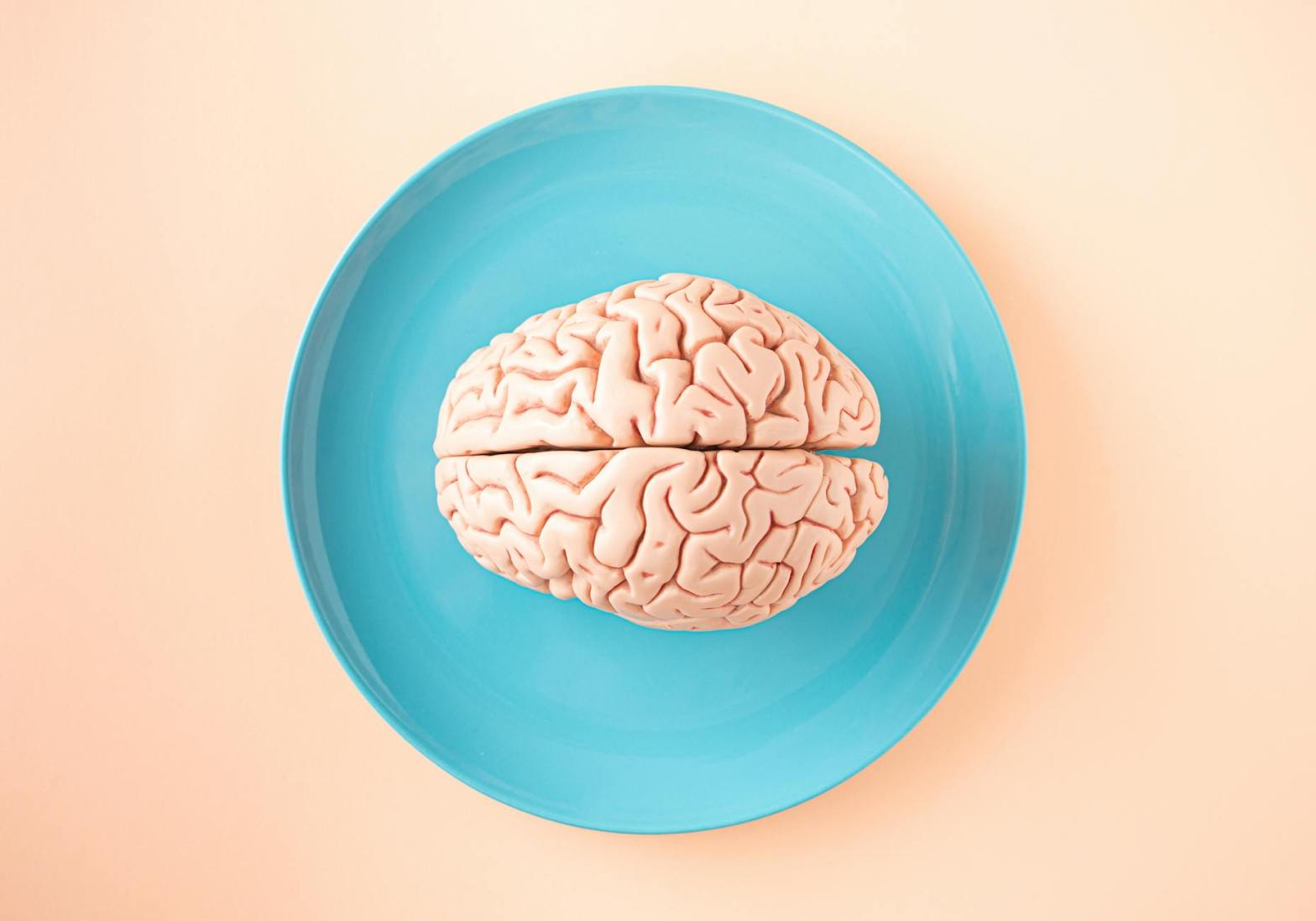
The human body is a state-of-the-art system, with different organs having their well-defined roles, executing their functions as efficiently as possible. As we explored in Part 1 of this blog series, the human body is similar to a human-built machine, with its set of inputs, processing and outputs. In this second part, let’s talk about the main CPU of the system – the human brain! My wife bought me a book last year “The Brain – A user’s guide to the supercomputer inside your head” (for whatever reasons!) – this is an incredible source of information to get to know our brain in great depth, covering different aspects in a concise and crisp manner. I highly recommend reading this book. Hopefully I can write a review of this amazing book sometime soon!
Like the human body, the human brain primarily has the input, process and output model. The human made machines, modeled on the human brains, like the computers or engines are fairly understood, at least by most, on how the damn thing actually works. The understanding of the human brain, in contrast, is a continuous work-in-progress. Books like “The Brain” do a great job in uncovering some interesting aspects, based on lots of research and studies. One of the interesting points mentioned in this book is that our brain’s powers peak at around age 22 and lasts for 5 years. After age 27, it’s just downhill – the processing speed slows down and working memory is able to store less information. However, while the ‘fluid intelligence‘ decreases, the ‘crystallized intelligence‘ aka wisdom grows – a balance of sorts to sustain, at least until we reach our sixties and seventies.
An adult brain weighs just 1.4 kilograms but contains 86 billion nerve cells with nearly a trillion connections between them. This supercomputer comes equipped with all sorts of design features like consciousness, memory, intelligence and creativity. Humans are trying to replicate this mammoth system as we chase to build artificially intelligent systems. The AI systems are getting better, no doubt, but they are still light years behind the elegant power-efficient yet high-performing human brain. Although AlphaGo, Google’s computer program defeated Korean grandmaster Lee Sedol at the game of Go, it required around 50,000 times more energy than Sedol’s brain to work out the moves and hence needed a sophisticated cooling system. Sedol, on the other hand, didn’t even break a sweat.
Brain Hardware: Much like a computer system is architected using a central processing unit (the CPU), memory, inter-connecting buses, Evolution – powered by nature, has brilliantly architected the human brain. Neuroscientists divide the brain into three main parts. First, the Hindbrain, located at the back of the skull is responsible for many of automatic behavior, such as breathing, regulating our heartbeat and swallowing. The most prominent component here is the cerebellum whose main job is to control voluntary movements and balance. Next, the midbrain, regulates eye movement, sleep and arousal. Finally, the forebrain, our main differentiator to other primates and mammals.
Let’s understand more about the forebrain, the largest part of our brain. It includes the Thalamus, a relay station that directs sensory information to the cerebral cortex. Much like the CPU consisting of Arithmetic Logic Unit, Control unit, registers (memory), the forebrain consists of Hypothalamus (controls hormone release to bloodstream), Amygdala (emotions), Hippocampus (memory), and the cerebrum (main core). Cerebrum consists of two halves and is home to creative intelligence, imagination and consciousness. Each hemisphere is sub-divided into 4 lobes: Occipital Lobe (vision), Parietal Lobe (movement, position, orientation, calculation), Temporal Lobe (sound and speech comprehension), Frontal and Prefrontal Lobe (complex thoughts, decision making, complex social emotions such as regret, morality and empathy).
It’s mindboggling that our 1.4-kilogram brain contains specialized cores to make us human, not just the likes of GPU/NPU/TPU to run neural network algorithms. Although our brain hardware is kind of hardwired since birth, we can upgrade its software by continuously learning new skills and information. Modern day AI systems like the ChatGPT are learning and getting better day by day. I enjoy the benefits of these AI systems, using it for both my personal and professional purposes. It truly amazes me on how it helps with any kind of topics, be it financial, health, coding, pretty much everything. All this is great, but as we rely more and more on the AI systems, I am only worried that rather than AI reaching up to the capacity of the human brain, we humans are trying to get the human brain down to the level of AI. The sad reality today is that the human-built machines are getting smarter, and the human brain keeps getting dumber. Natural stupidity is more dangerous than artificial intelligence, as they say.
We have the sensory organs providing inputs to us 24/7. Although it does go under hibernation during sleep, there is a part of it always sensing. Much like the low power mode, where a small microcontroller checks for any wakeup signals, our brain too continues to run algorithms in low power mode. An interesting revelation from the book – It’s easier to wake up people by calling their names. Our brains have been programmed with our names, and this in essence becomes a wake word for the individual. This is obvious in the way we react immediately when someone calls our name, as against to calling some random names & words. We continue to add new wake words as we progress in life – Observe our antennas tuning up when someone talks in our local language in a faraway land, or someone mentions our country or hometown while travelling abroad, for example.
All the inputs are sent to the central processing system to process. The eyes capture and transmit the information to the brain, which then creates the image. There is information of wavelength (color) and number (brightness) from the photons hitting a particular spot on the retina. This data is processed in the visual cortex, located at the back of the brain. Our eyes are one high resolution camera – humans have designed several cameras but nothing comes close. You might have noticed – you look up to the sky, a beautiful full moon shining right in front of you. It’s so beautiful that you take out your mobile phone and capture it on the phone camera. The final picture captured by the phone is not even close to the one registered by our brain, simply incredible.
Output in terms of the brain activity can range anywhere from appreciation to body movement to speech. A nice happy meal, enjoyed by all our senses results in satisfaction and contentment. A sign of threat results in a fight or flight signal to the body. Conversations with fellow humans requires us to respond with words out of our mouths. It’s incredible how fast we process the other human’s speech and reply quickly.
Garbage-in, Garbage-out: A phrase popularized in the field of computer science, garbage-in garbage-out means that if the input is invalid, thrash, or not credible, expect the output to be nonsense as well. Much like the computers, we see this in action with the consumption of insane and mindless media by the Human brain. Scrolling through the social media posts and updates mindlessly has serious impact on the brain. My wife, a Montessori teacher, mentioned the other day that in some cases the phone screen addiction leads to minor autism in kids. And then we have some of the adults, mostly seniors, who are taking in a lot of negative contents on the Internet and getting more negative and fearful.
Regression: Another term from the IT field, regression happens when something that had been working well has now stopped working. Humans have evolved, and with evolution have garnered several skills. But if we don’t continue using these skills, we eventually lose them. As mentioned in “The Brain” book, our general IQ over generations has been tapering down. The current generation could well be the smartest homo sapiens that ever lived on earth – if that’s something to cheer about. Another major regression we are facing is the art of writing itself. With the advent of electronic gadgets, notes are taken down mostly in laptops and phones, and people have all but entirely stopped writing with a pen and paper. If this continues, one day the homo sapiens will lose this wonderful skill.
The human brain is one incredible machine, thanks to evolution and all the homo sapiens that ever lived before us over millions of years and helped in whatever ways they could. We should pass the right baton to the next generation by keeping our brains in good shape and make all efforts to let the younger generation be aware of the power and magnificence of this system. There are a set of dos and don’ts when it comes to brain health, and the Internet is abundant with lot of great information, please take your pick. I think it mainly comes down to managing the inputs, ensuring good processing for the right outputs.
Discover more from Keep it simple, stupid.
Subscribe to get the latest posts sent to your email.
 Keep it simple, stupid.