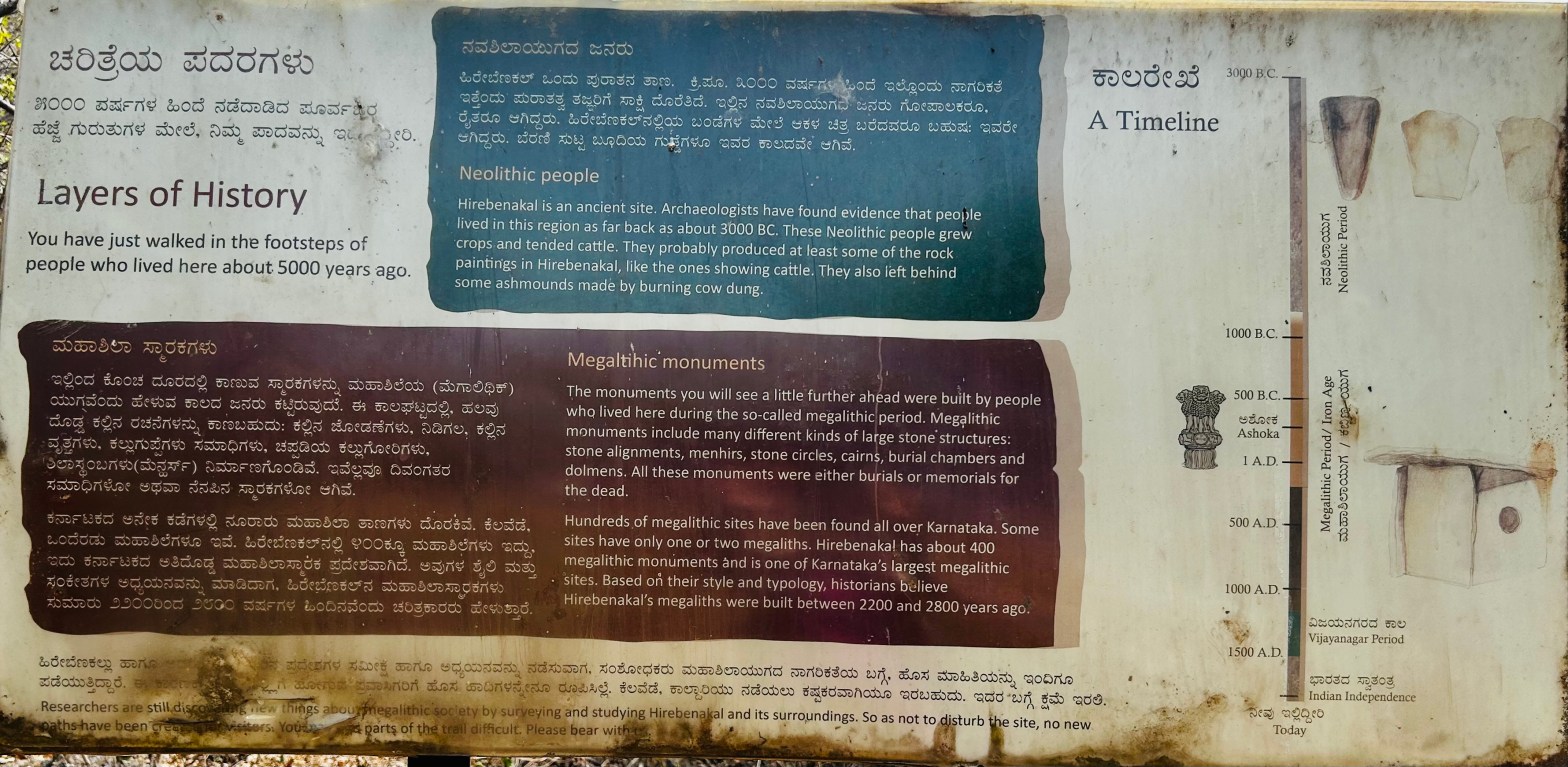
I first read about these prehistoric megalithic structures in North Karnataka few years back and had included this into my list of must-visit tourist attractions of Kannada Nadu. When we travelled this Jan for a short trip to Hampi, I was delighted to find that this historic site was just an hours’ drive from there. Naturally, we had to visit this place! Hampi is historic, around 500 years ago, but it seems modern when compared to Hirebenekal which dates more than 2000 years ago, or even 3000 years based on some historians. It’s not every day that you come face to face with such prehistoric iron-age structures, that speaks to you about the endurance and resilience of the human spirit. Through this blog I like to urge each and every one of you to visit this historic site, it’s a must-visit especially if you are in the vicinity of Koppala/Hospete districts. A hike through incredible history guaranteed!
An easy 50-mins drive from North Hampi, mostly on a nice Koppala-Gangavathi highway, and a slight detour, first into narrow roads crisscrossing the quintessential village of Hirebenekal, and then finally into the “Are we lost?” kind of roads along some paddy fields. My mind kept exercising one slogan now – Darr ke aage jeeth hai (Beyond fear, there is victory)! An arch under the railway track, and then we saw couple of guys near the location waving us to drive towards them. The plants on these final 50 meters stretch had been cut, so you could drive around, although the smaller vegetations brushing against all sides of the car and making weird sounds, and concern if it would lead to scratches. We were the only ones there at the time, we parked at the start of the walking point. Two guys cheerfully looked onto us. I didn’t know what to expect, what to negotiate. Asked if I really must change into shoes, the guy told we just walk up with this itself – pointing to his sandals. We changed into shoes, nevertheless.
One of the gentlemen spoke and told it’s an easy walk up, just follow the yellow painted arrows along the route and you should not get lost. Based on what I had read on google reviews, I asked if there were any wild animals, he casually said yeah there are few bears and leopards, but they don’t bother us humans at all. As it is, the three of us are shit scared of even regular animals, so we couldn’t risk wild animals for few bucks, the math just didn’t add up. I asked him if he could come with us – He smilingly told, if you want me to come, I can surely come. If you want to go by yourself, that is also fine. I asked how much we need to pay, he said typically people pay Rs.500-600. I said, ok please take us! I just loved his completely non-pushy attitude, giving us a sense of control about the decision whether to hire him or not. Hiring his guide services was probably the best decision we took, not only he safely took us up and down, but he shared some incredible information, some philosophy, thoughts on ageing, history, human-animal interaction, etc. He mentioned his name Veera Bhadra.
Slightly ahead is the main entrance, a security guard takes a selfie of all the folks going up. Probably to ensure that what goes up, also comes down! I just posed with Veerbhadra here:
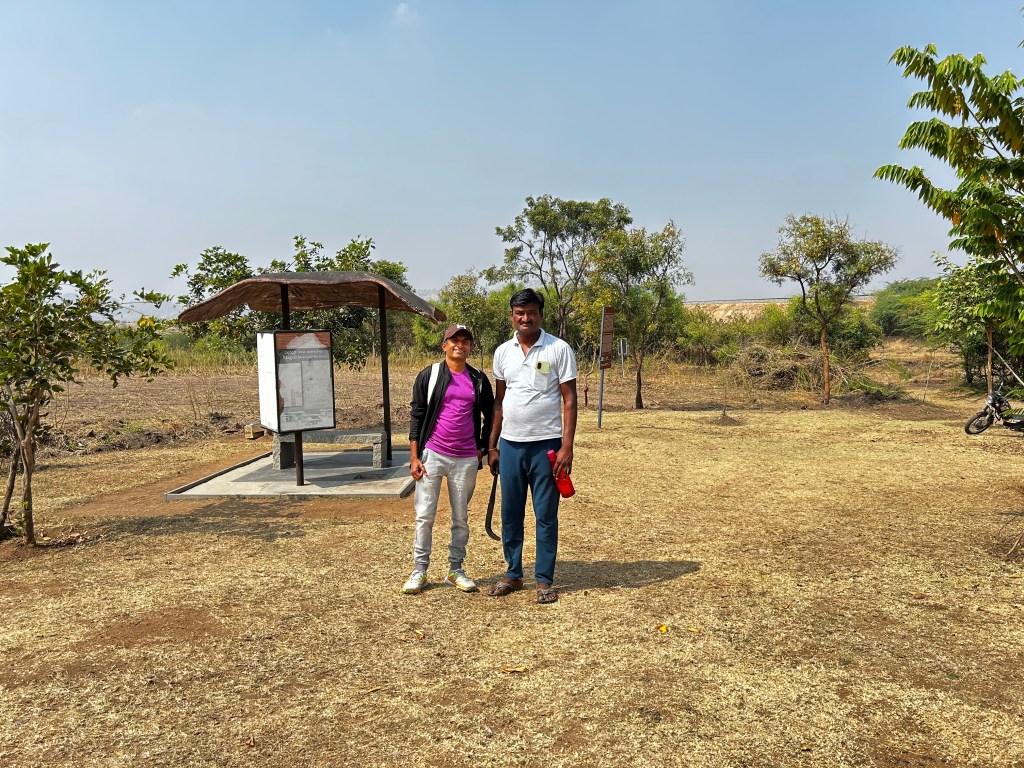
A machete in his hand to clear the outgrown shrubs, move pebbles and keep the walking path clean. A bottle of water to keep himself hydrated and an amazing jazba – Passion, enthusiasm, zeal and the drive to make this place a better place for tourists and history enthusiasts. He has been guiding tourists around the area for more than 15 years, since he was 21 years old.
It was a good 2 km hike up, on a rather easy terrain, my family and I were able to follow the guide’s lead in his natural stride. Along the way, he did a slight detour (from the yellow paint arrow route) to show us some rock paintings. These were stunning, and so rare, but soon fading away into history.
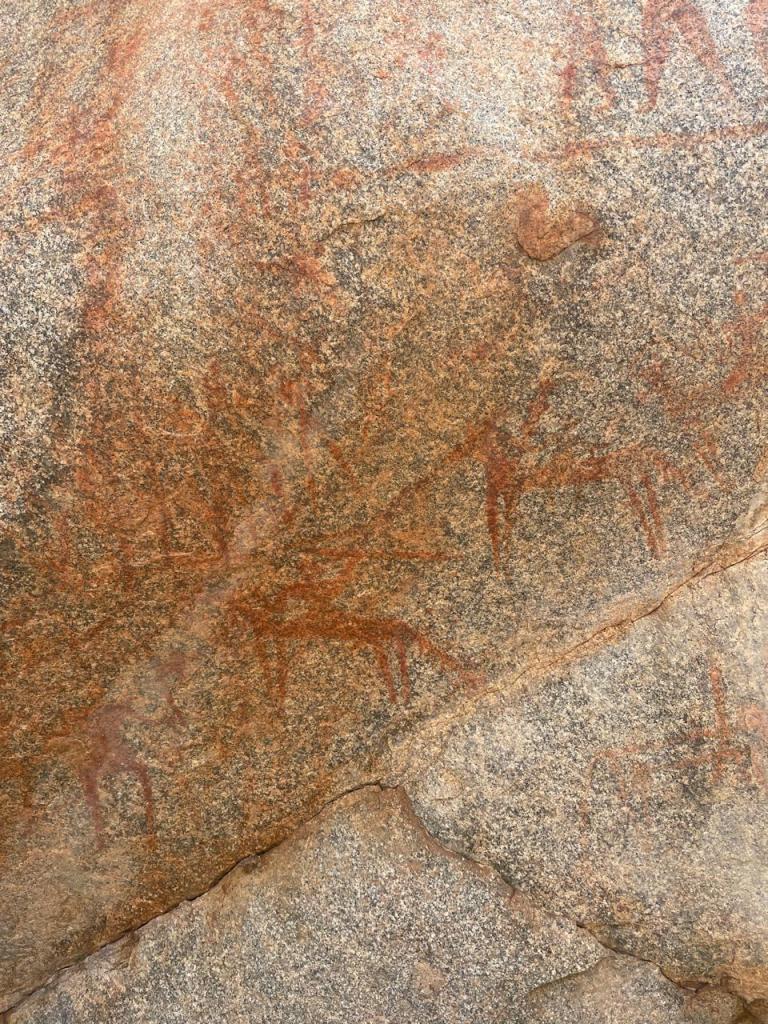
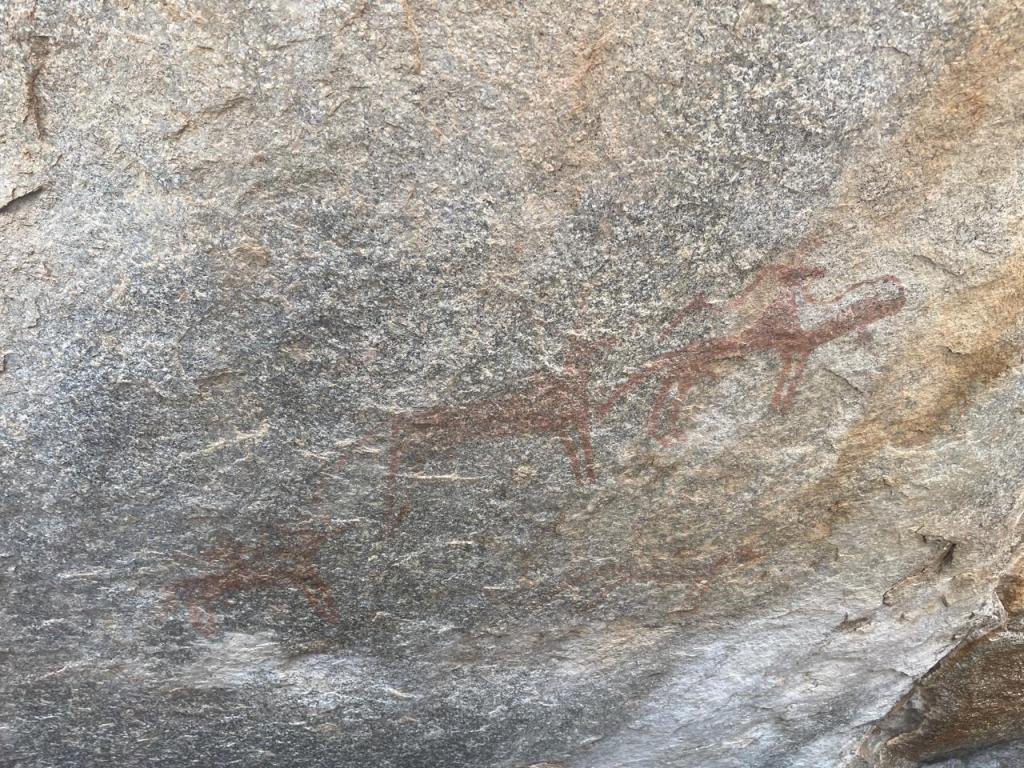
It was around noon time, and super-hot, we sat on the rock next to the painting for a while before moving on the route up. His thoughts are that these people who lived during the Neolithic and Iron age period probably lived for 300-400 years. How did they live that long? He had multiple reasons to share – they didn’t eat rice, only the uncooked plants, fruits and even raw meat. They took the brunt of the nature head-on, being uncomfortable with the cold and hot environment that nature challenged them with. Physically very active while they kept hunting and foraging. Domestication probably took us down on the ageing story. He told he has seen some elders living healthy until 120-130, and then 100-110, and recently only 80-90 years! We are talking about health span, where the old people are active to take care of themselves without assistance. Based on what I have been reading since few months now, I couldn’t agree more!
First dolmen we saw were quite small in size; this is told to be of the dwarf people – the Vamana avatar generation maybe, who knows? Little further were the tombs of infants and younger kids. An interesting car-shaped rock was ahead. We don’t know who placed the wheel shaped rocks at its base though.
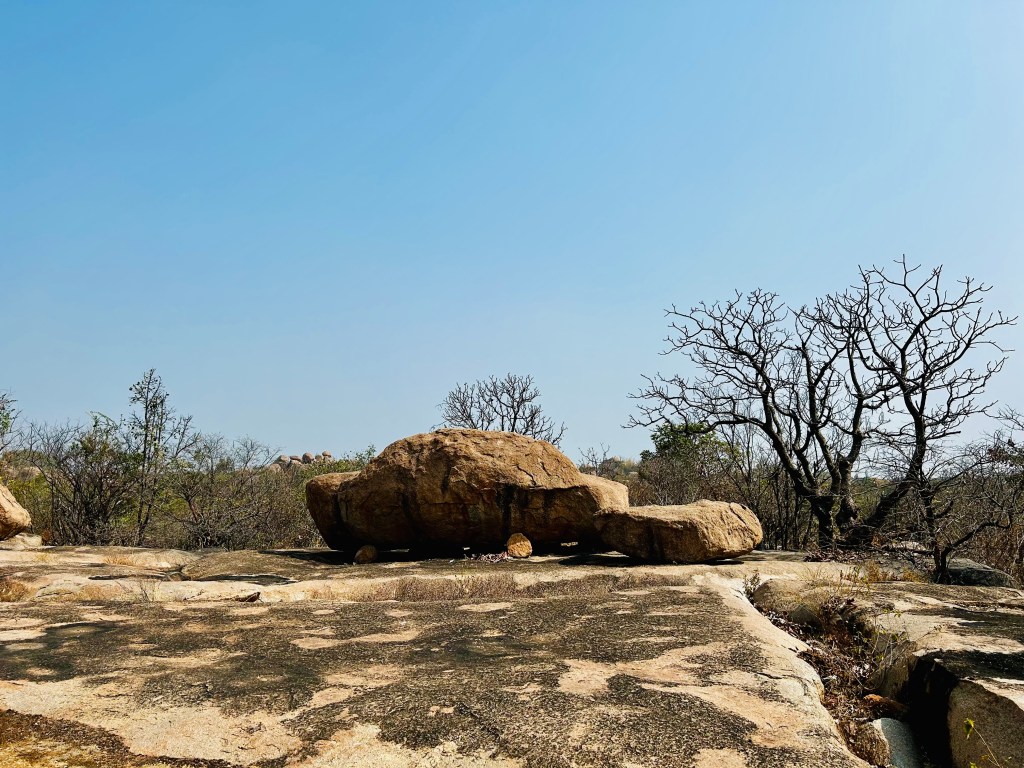
And then we enter the wonderland of massive dolmens – 7-8 ft granite stones, topped with wider granite to cover the hut-like formation. These were where the dead were buried, with full respect, remembering them by placing flowers inside this “shrine”. The walk through these plenty of dolmens was quite magical – seemed a different world altogether.
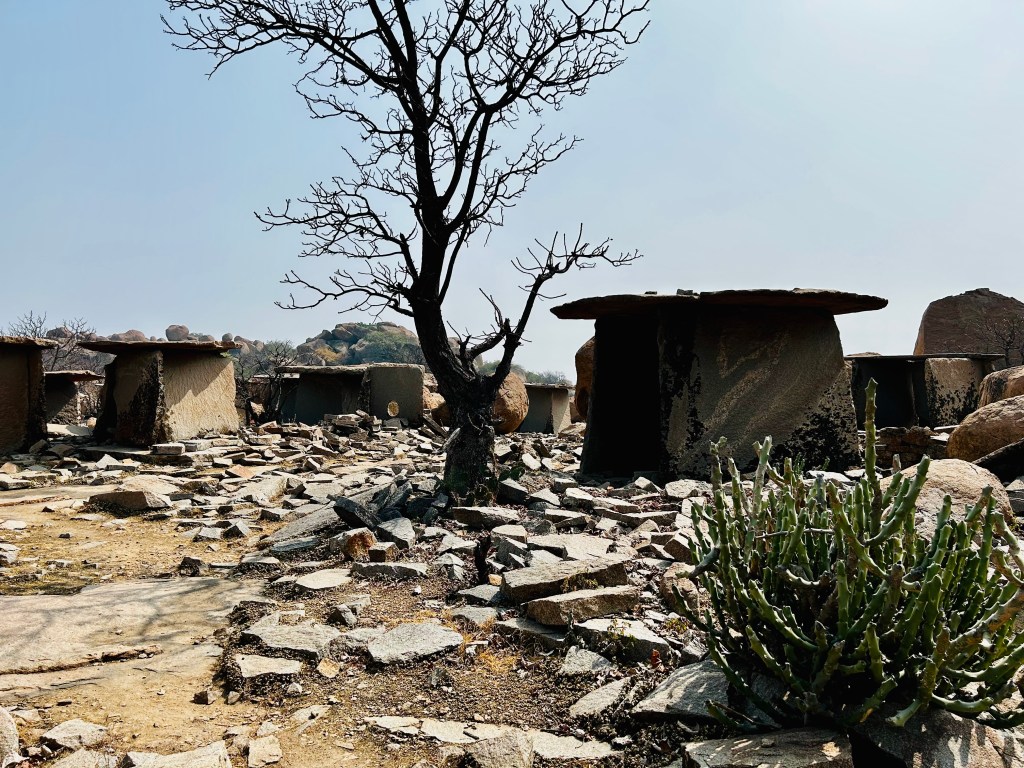
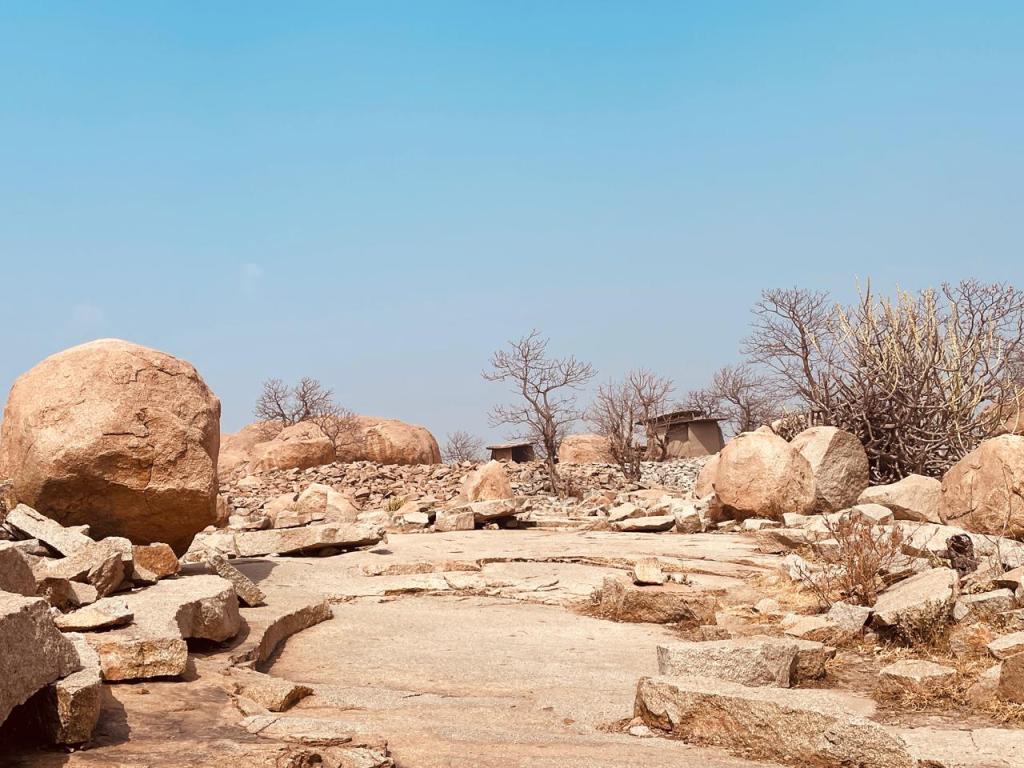
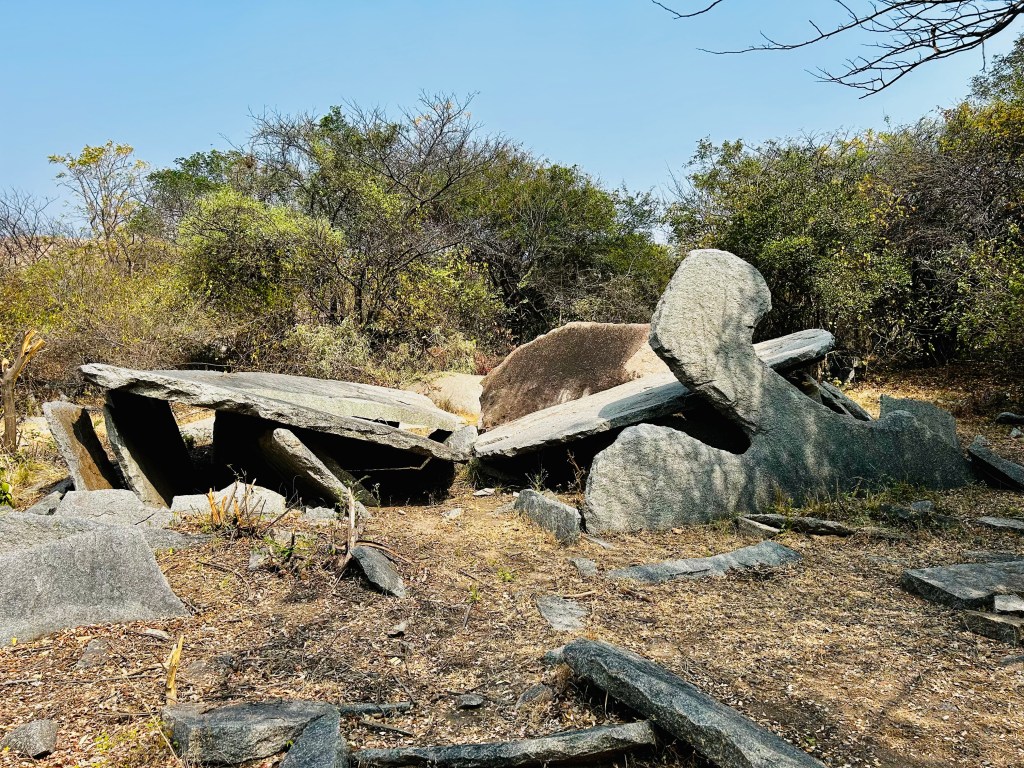
Veerabhadra took us to another place, a special tomb, different from the “common” tombs – he mentioned these were identified to be that of the village chief and his wife. There was a special rock placed in the shape of human face in front, now that had fallen down though.
There was a very nice pond area, and we took refuge under the shade of a huge rock, just watching the pond, the ducks doing their thing, other birds quenching their thirst.

We spotted some poop, and he told us these were the bear poops – there are probably 7-8 bears in the vicinity, and they would come here for the water. He told us, again, these bears don’t bother humans at all. They just follow the “Live and let live” policy. He told Humans need to be afraid of only fellow humans. Animals might cause harm to fellow animals, but across the species, the meddling is very minimal.
He brought up incidents where some local Youtuber posed on top of these dolmens and share his video/picture online. The locals kindly requested him to take it off, but he was adamant, now they put a legal case on him. He complained some people have such scant respect for history, scribbling something on the rocks, trying to climb the dolmens, etc. It was tough to ensure folks would refrain from spoiling the artifacts while the locals like him toiled to maintain it as authentic as possible. He was quite annoyed why some people did such acts, what was the purpose he couldn’t understand. The site was apparently discovered in around 1956 when locals hosted a retired army officer to lead the survey. Until recently, they have unearthed about 1200 dolmens in the area.
He then sadly told how few months back Hampi shone in bad light when a foreigner and a local woman were raped, and their male friend was murdered by local miscreants. This incident sparked international outrage and cost the local tourism heavily. He told how due to a handful of miscreants, the entire local population got punished. He asked me if that was right? He gave an analogy where due to handful of terrorists, the affected civilization bombs or heavily casualizes the population “protecting” the suspected terrorists, in retaliation. Lot of innocents would suffer due to a few perpetrators, this was bad.
Next to the pond, there stood a signboard, that was to provide certain information about the pond and nearby. However, the paint had completely faded. Veerbhadra jokingly said “Sir, this board was painted just 10 years back and the paint has all gone. And look at these cave paintings, they have survived more than two to three thousand years”.
There were a very strange kind of shrubs growing under these dolmens, kind of acorn shaped, very dry, with a nice golden hue color.
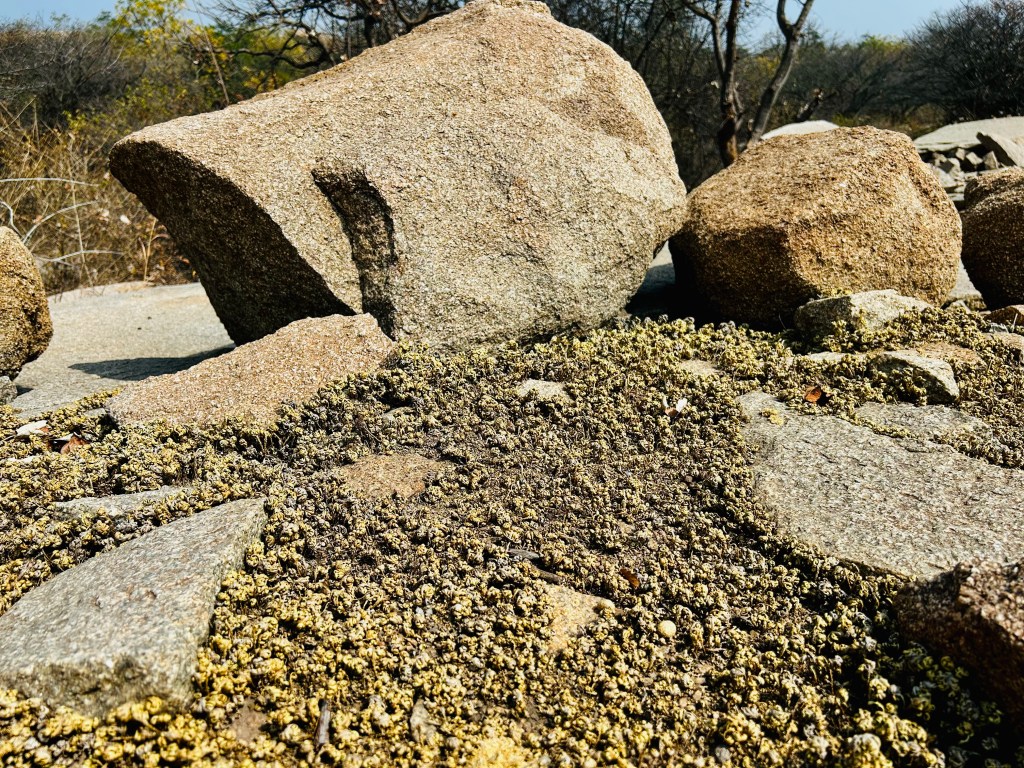
When we tried to pick some of these, Veerbhadra mentioned that some folks would take these shrubs to do some black magic. Hmm, quite eerie, we dropped them there itself.
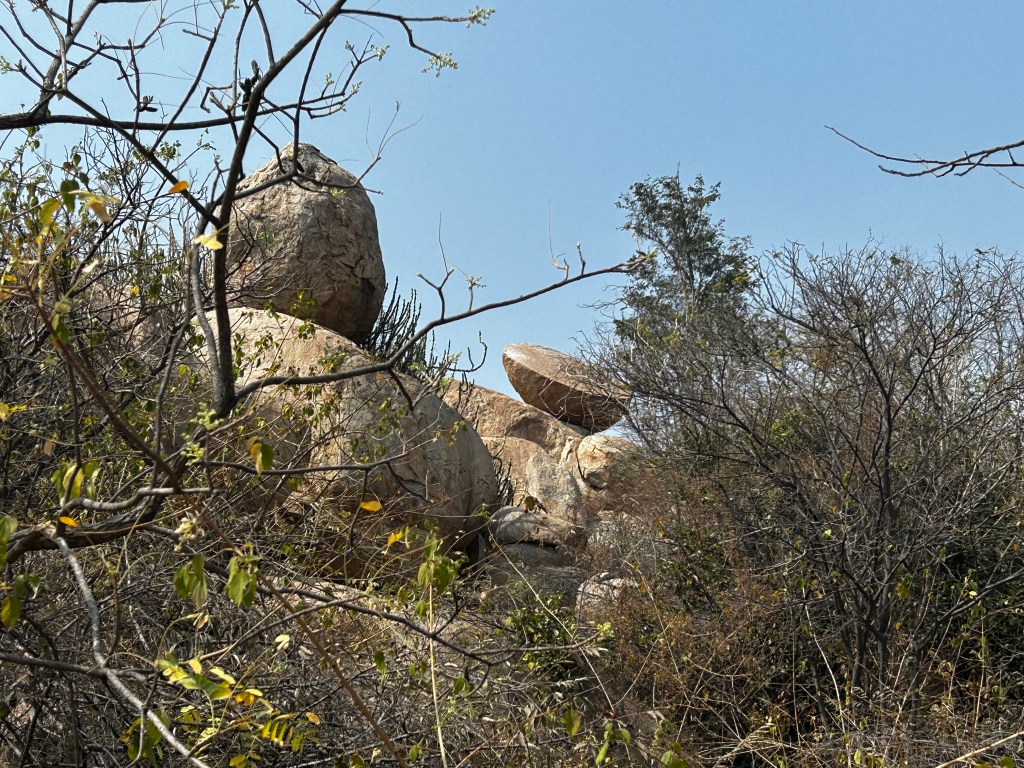
Walking down, he pointed us to a hill and a nice drum-shaped rock. Apparently, they used this drum during ceremonies, and the sound would be heard for around a kilometer or so. However, now they have blocked the access as folks would try to their hands to hit the drum rock with whatever they found, and this was damaging the rock, as we can see the white patch on one of the sides.
The walk back was easy, and overall, we might have spent around 1.5 hours at this place. We bid farewell to Veerabhadra and mentioned about my interest in blogging about this unique experience, and he was all happy about it, with the intention to show this unique historic site to one and all. Currently, there are no entry fees, but once this place gains some traction, we can expect the government to put up a ticket counter! You may contact Mr.Veerabhadra at +91-8970161587, he would be very happy to host you. Although I conversed with him in Kannada, he mentioned he can speak Hindi and Telugu as well. Should you need any general information, do drop a message, and I would be happy to help, too.
Discover more from Keep it simple, stupid.
Subscribe to get the latest posts sent to your email.
 Keep it simple, stupid.