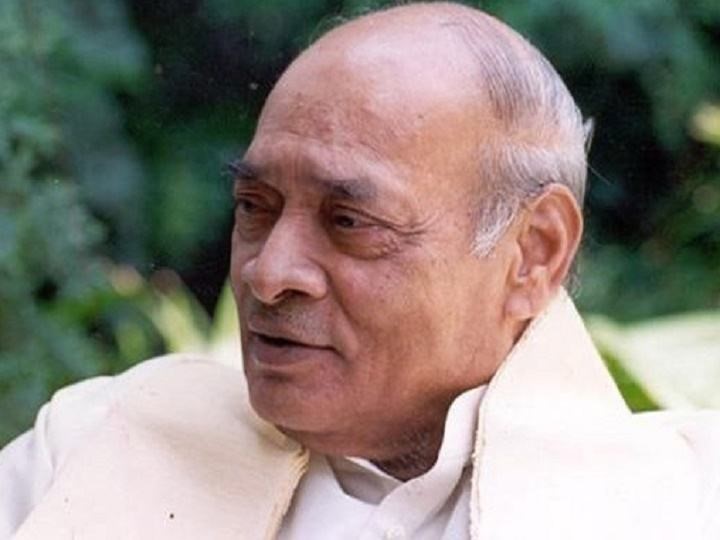
Today (June 28th, 2021) marks the Centenary (100th) birth anniversary of Pamulaparthi Venkata Narasimha Rao, popularly known as PV, the Prime Minister of India from 1991 to 1996. Until recently, I thought he just happened to be at the right place at the right time as the Prime Minister to undertake the massive economic liberalization of 1991. While watching “The accidental PM” movie sometime back, in one of the scenes, Sanjaya Baru comes with the sad news that Mr.Rao passed away & Dr.Manmohan Singh is visibly shaken. The faint response “Mr.Rao was a good man” encouraged me to learn more about Mr.Rao. As it turned out, there is a lot to PV, his leadership & personality than what had previously caught my eye. Passionate talks by Sanjaya Baru and Vinay Sithapati gave fantastic insights into the thought process of the otherwise not-so-interesting PV Naramsimha Rao.
Few intriguing questions that really challenged my presumptions about PV: How did a minority government, with a non-Nehru non-Gandhi at the helm, not just survive for 5 complete years, but also make significant impact to the India story? Although the previous governments “contemplated” the economic liberalization, the manuscript being discussed over & over since early 1980’s, why couldn’t they get it done? How did PV manage to get to the helm of Congress party after the sudden demise of Rajiv Gandhi? Vinay Sithapati, a political scientist at the University has spent a big chunk of his academic life doing extensive study on PV. His book “Half-lion” is an amazing biography that shows different facets of our “forgotten” PM & tries to answer these pertinent questions. As Vinay puts it, the answers lie in the unique traits that PV possessed, set of skills that could be helpful to leader of any discipline (not just political) to make significant impact in a modern organization.
Unusually Experienced: Before becoming the Prime Minister, Mr.Rao had been Chief Minister of Unified Andhra Pradesh, become Member of Parliament & joined the Central Cabinet where he worked in multiple ministries like Home Affairs, External affairs, Defense and Education. In a federal government structure where many departments such police and education are state subjects, the experience of leading a state becomes extremely valuable. This probably helped him in handling difficult internal Home affairs in Punjab, J&K and Assam much better. Serving as Union ministers under other Prime ministers gave first-hand experience in the workings of the Central government & different ministries, a great experience in a bureaucratic world. Likewise, in any organization, having significant experiences in various departments should make it that much easier to lead.
Possess a World of Information: Mr.Rao was a highly intellectual person, he read a lot of books and kept abreast of all that was happening around. He held great deal of information on the country, states, his friends and foes. Although he sometimes used unethical ways to source this information like unleashing the Intelligence Bureau on rivals, when faced with a problem he always knew whom to see, what to see. This quality of possessing the relevant information on whom/what to see is equally significant in any organization, as Vinay Sithapati puts it.
Uniquely Contradictory: Contrary to the “boring” character tag, PV was a rather interesting character. He was corrupt yet visionary, principled yet immoral, charmless yet adulterous, cursive yet respectful of talents, pitiless yet believer of freedom. As Vinay puts it, just like the Hindu mythological story of Hiranyakashipu, when India faced the economic “demon” in 1991, it needed one such contradictory character, a Nara-Simha, a Half-lion to come to the rescue. PV rose to the occasion. Being contradictory in nature, it was easy for him to play lion (act tough), play fox (deceive) and play mouse (remain silent), Vinay argues. He knew when to win, when to lose, when to be silent, an important trait when leading any organization.
Chose right talented individuals without being insecure: With no prior experience in Finance, he made a radical shift in the selection process and requested for a talent who could woo the western world to lend money. Interestingly, Dr.Manmohan Singh wasn’t the first choice; it was first offered to Mr.I.G.Patil who declined. Apart from Dr.Manmohan Singh as Finance minister, he chose a core team comprising of talented individuals for specific roles: Amar Nath Varma as principal secretary, Naresh Chandra as Cabinet secretary, Montek Singh Ahluwalia, Jairam Ramesh as officer on special duty, P.Chidambaram as commerce minister, also tried poaching liberalizers from other parties. He kept the industry ministry to himself, which was the key decision-making ministry to abolish the License Raj. As a team leader, he formed a core team with complementing talent, without being insecure, a prized quality equally important in leading modern organizations.
Art of survival: When serving as Chief minister of Andhra Pradesh, he got sacked quite early on, when he made too many enemies while unleashing the land reform policy. An important learning from this chapter transformed PV into Ajaathashatru (One whose enemies are yet to be born). As Vinay writes, he didn’t have friends, but then he didn’t have enemies either. Neither would any group rally for him nor oppose him vehemently. He was a balancer of sorts between warring factions, one not so powerful yet could keep the herd together. This quality proved very important in his ascension as Congress Party leader after loss of Rajiv Gandhi. Another interesting point was how he kept all ambitions to himself, careful not to flout openly, while he was a highly ambitious individual. The art of survival to not just survive but put oneself in the position to lead teams efficiently is a useful skill in the context of modern organizations too.
Natural curiosity: PV was a linguistic, well versed in over 17 languages. He was well versed in Sanskrit and went on to quote well-timed content-driven Sanskrit verses in the Parliament. During the early days of computing in India, he got hooked into computers, learnt COBOL and Basic programming languages, also enjoyed working on Unix Operating system. This was fascinating, given that he was more than 60 years old at the time. In one of the incidents during his younger self, when he found a faulty water pump, he got his hands dirty and isolated & fixed the problem and complained to the pump manufacturer about the defect. This natural curiosity, which makes one fascinated about innovation & workings in any given field is again another great trait to be possessed in modern organizations, not to be a frog in the well and become more receptive to new ideas.
Ability to adapt & adopt: Hard core socialist turned free market liberalist in sudden turn of events. He knew what he had to do, and the pragmatic person in PV adapted to the changing landscape. USSR was disintegrating & with it the idea of socialism. He put the rhetoric ‘Nation comes first’ to best use and opened the free market, keeping aside his ideology. Mr.Rao adapted to the technological innovation such as the Nuclear programme, of which he was the original architect. He had asked Dr.Kalam to be ready for nuclear tests in 1996, and after government changed, he had discussions with the new PM, Mr.Atal Behari Vajpayee to ensure a smooth transfer of knowledge. He also adapted & adopted the “Look-east” policy during his tenure and made significant headway. As they say, Change is the only constant in life. The ability to adapt & adopt in testing times is great leadership trait to have for any organization.
In summary, it’s quite unfortunate that we have forgotten such a high performing & underrated Prime minister. It’s about time we keep aside our political/ideological/regional inclinations & give this man his due. And while doing so, we could well learn some great leadership skills from this pragmatic statesman. I would highly recommend everyone to grab a copy of “Half Lion” by Vinay Sithapati, a very well researched Autobiography of Mr.Rao. Long live PV Narasimha Rao.!
Discover more from Keep it simple, stupid.
Subscribe to get the latest posts sent to your email.


Personally, I am not a fan of politics, but quite fascinated that you are getting so many insights to help grow our modern organization from there. That’s properly explains the correct way of reading books, see the world with a pair of new eye, and feel that with your own mind.
‘One man’s view of the world’ from Singapore’s PM, Lee Kuan Yew, was one of the few books I read few years back. And I think art of survival was one of the key points that make Singapore such a success in the past century.
BTW, respect and retrospect history and characters in history is people here in China has been long doing. I am just starting to pick up. There is always something “new” we can learn from history, especially for China and India, countries with long and prosperous ancient history.
LikeLike