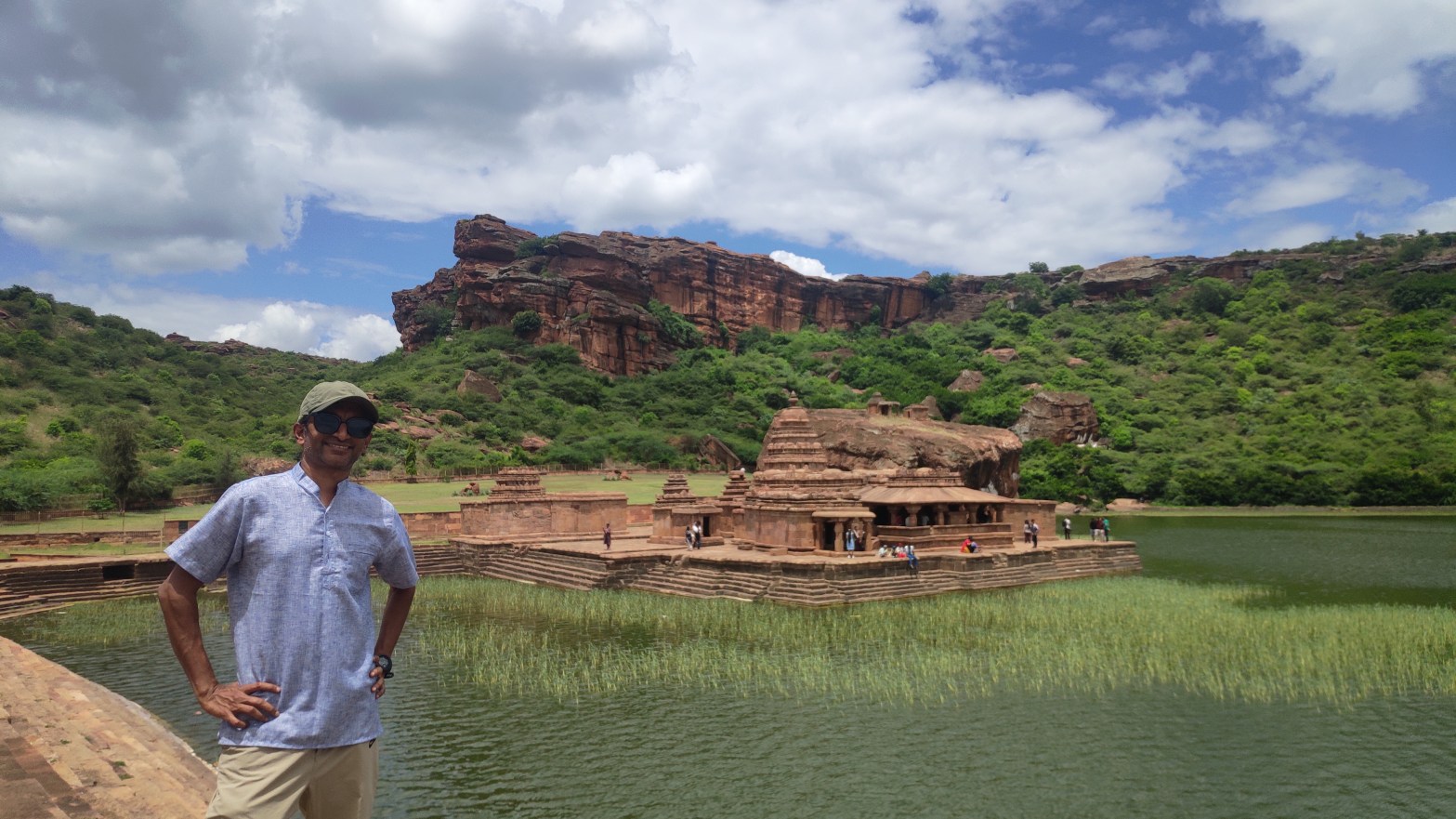
The present day Bagalkot district of Karnataka was the center of mighty Chalukyan kingdom that ruled most of southern India between the 6th and the 8th centuries. Fourteen centuries on, the place still holds history, narrated visually by the glorious monuments of the Chalukyan era. A visit to the Chalukyan triangle of Aihole, Badami, and Pattadakallu is an epic journey through history. Me and my family were treated to a wonderful heritage tour this June 2026, an experience that I happily write about in this blog. We should all know our history, especially of the land that we are born and live in. We should question who ruled our lands for centuries? How it was like many years back? I have been reading a lot around this, and this trip gave me an opportunity to reflect on the golden age that Kannada Nadu once thrived in.
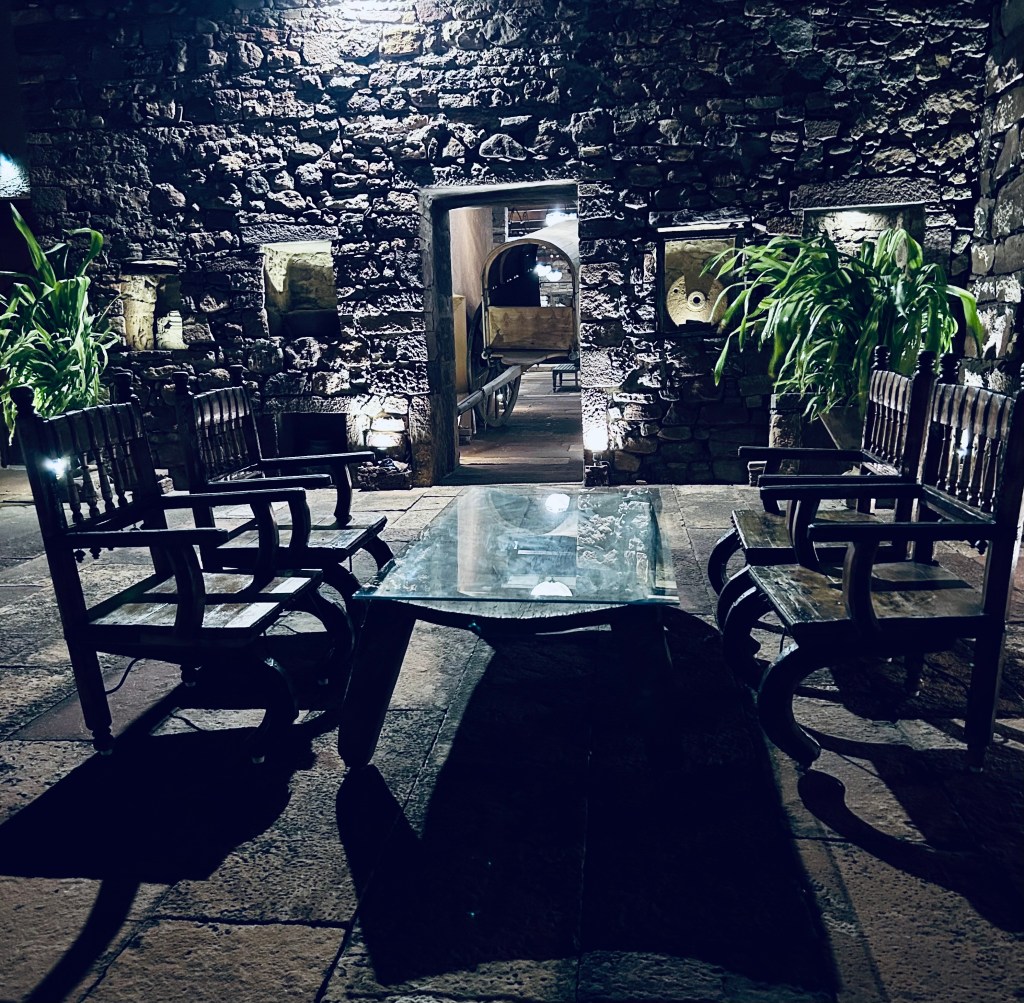
It was to be a 3-night/4-day trip, a nice drive from Bangalore along the NH-4 highway. For accommodation we had to choose between the resorts at Badami and one heritage resort at Aihole. To progress gradually through the centuries, it’s recommended to first start at Aihole (The Laboratory of experimentation), move to Badami (The seat of construction), and finally visit Pattadakallu (The pinnacle of perfection). For this reason, along with the unique experience of staying at a heritage hotel, we choose Wada1 at Aihole. Apparently, some landlord lived here before, now it was bought by hoteliers, renovated and opened as an experience for heritage seekers. It turned out to be good choice.
Day 1 – Aihole, the cradle of Indian Temple Architecture: We reached the Wada1 hotel Aihole by 2pm, they have a nice private parking once we pass by some village houses at the entrance. The room we got was very good, with a patio at the front, and nice bed in another partitioned room. After freshening up, we set out to explore Aihole by foot today. Everything important at Aihole is walkable from this heritage hotel, so this was very nice. The main Durga temple complex houses plenty of monuments, including the Durga temple, the Lad Khan temple (Chalukyan Shiva temple), Gaudargudi temple. The entry fee is Rs.25/- entry for the monuments, Rs.5/- for the museum. I easily get excited about these historic stone monuments, this visit was long pending, and the first thing I did after we entered was to touch the wall of Durga temple and let out a whisper “wow, I am here, finally“.
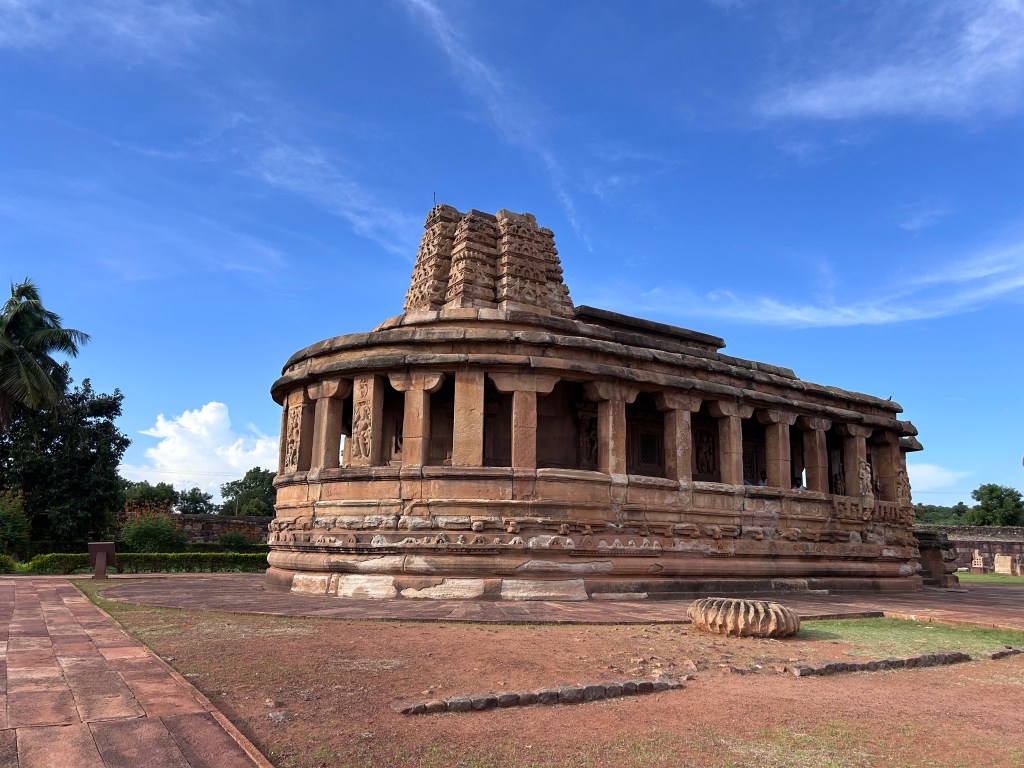
The museum would close by 5pm, we were asked to visit this first. The artifacts at show were second to none, small yet great collection of divine idols dated 6th to 8th century. There is a section depicting the various ages of Human evolution, and how this local region played host to this transformation. We could spend more time for sure. We then walked around the temple complex. Chalukyas experimented with temple building here at Aihole, this laid out the foundation for a rich history of temple architecture, not just for the Chalukyan royalty that followed, but also the other south Indian dynasties that succeeded. This is why Aihole is referred to as the “Cradle of Indian temple architecture”. Although an experiment in itself, every temple is a work of art, uniquely designed.
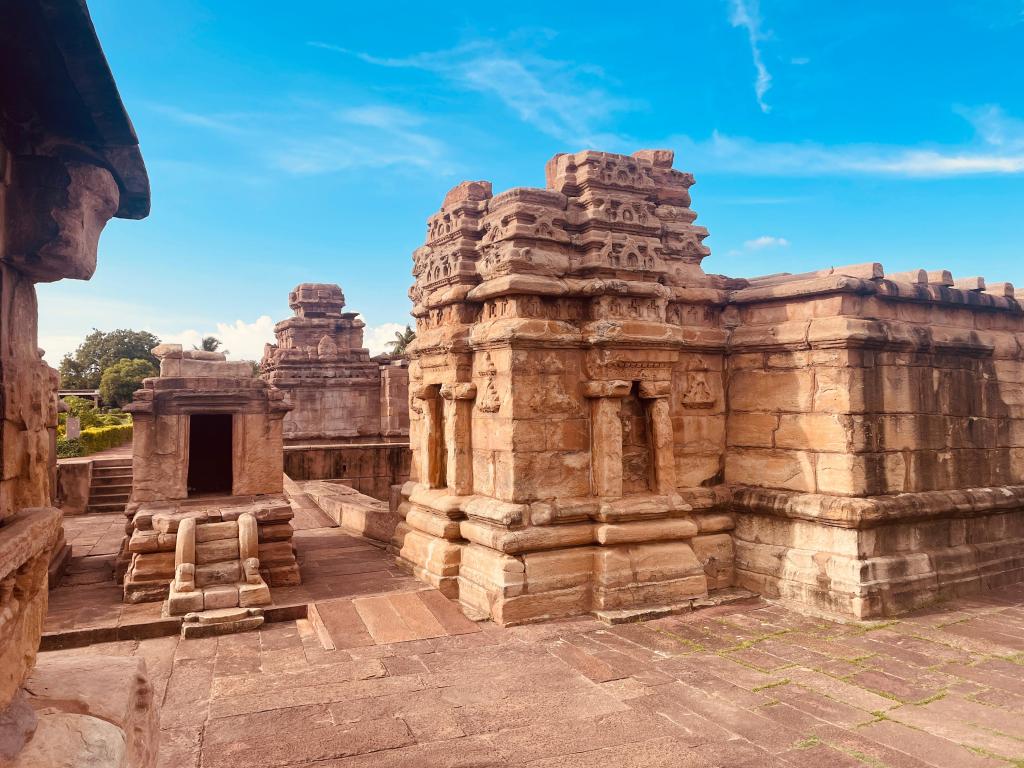
It’s a nice place to click great pictures. We walked around the temples; there is a Kalyani (pond) but not maintained. Inside one of the temples, a dog was happily taking its evening siesta. Lad khan temple was very good, with interesting design. We probably got out within 45 mins. We walked back towards the hotel, slight detour and up to the Meguti Jain temple, perched on top of a local hill. Nice and easy climb up and as soon as we reach the top, we are treated to a stunning view, it was one of those “wow” moments for me. Please do read my google review of this place here.
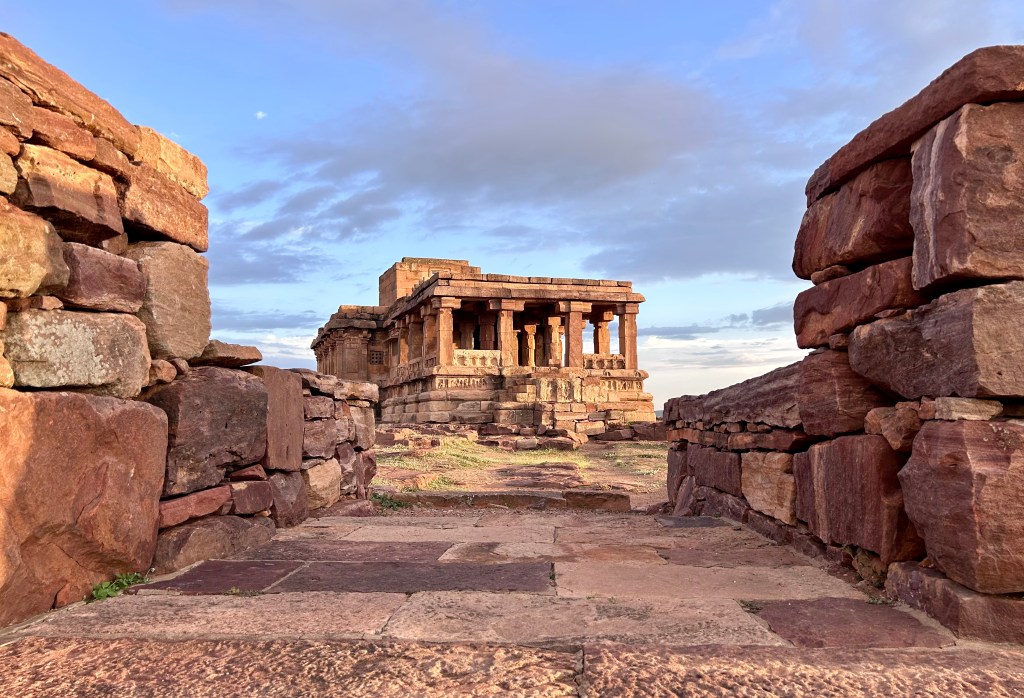
After descending down, we went to the Mallikarjuna temple near the base.
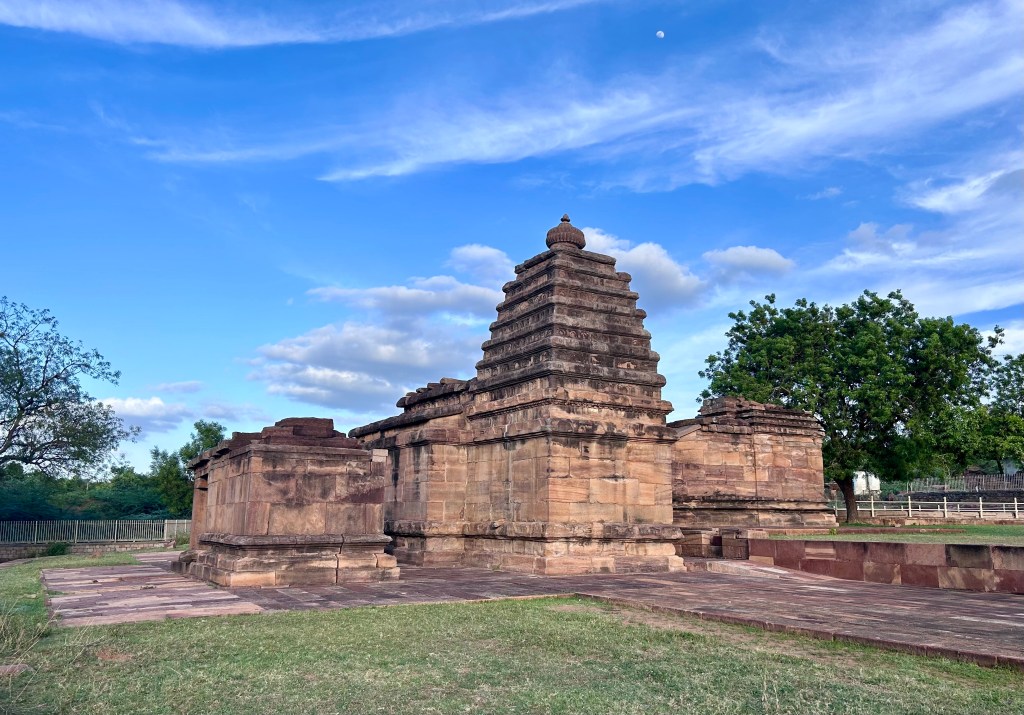
It was very peaceful, just bit of hustle from the boys playing cricket nearby. Lots of goats grazing inside this complex, and nobody seemed to give a damn. An old man came sat next to us and started conversations, first question from anyone here seems to be “Yaava ooru?” in Kannada, meaning “Where are you from?”. Then the curiosity is piqued and several questions follow through about your profession, where are you staying here, etc. The man suggested to visit the Ravana Phadi temple, probably the only cave temple in Aihole. It was a good 15 mins walk, and this was yet another amazing monument.
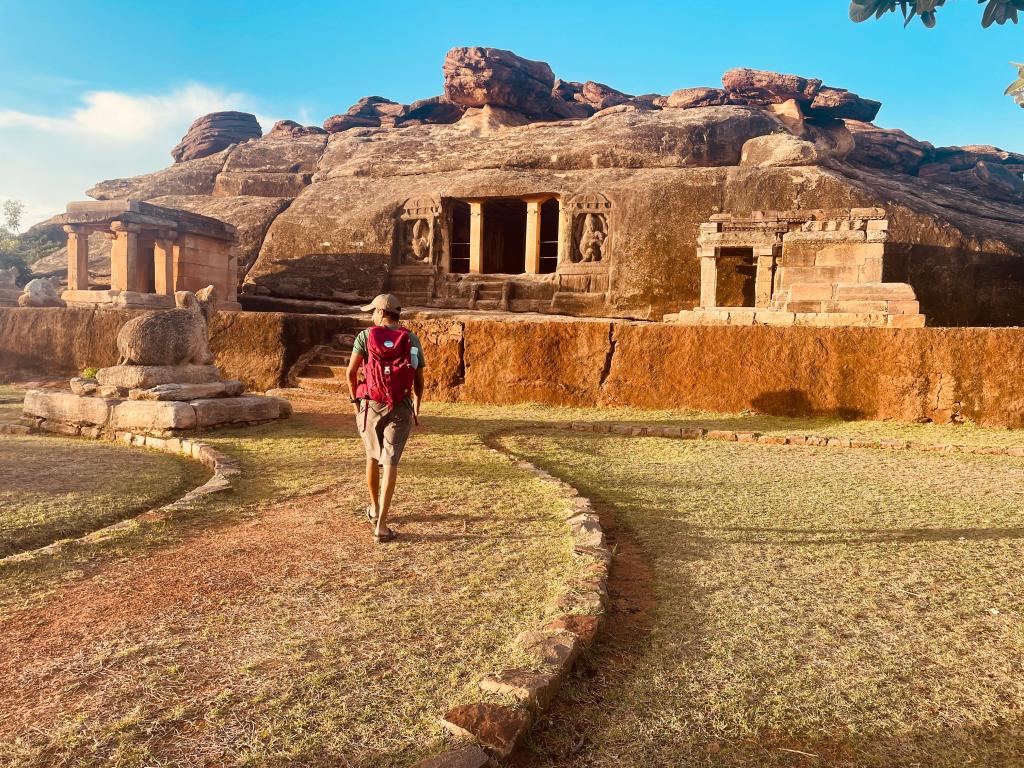
From the outside it looked so good, but inside it was all about the bats and that smell. Given the state of affairs, I was only thankful that these monuments are still surviving since 6th century. From this place, we could sight the Meguti Jain temple. I am not building this up, but to me, this exact moment felt like the Parthenon view that we get from the temple of Olympian Zeus at Athens – this place has some serious potential, its completely underrated, underdeveloped and completely ignored, very disheartening.
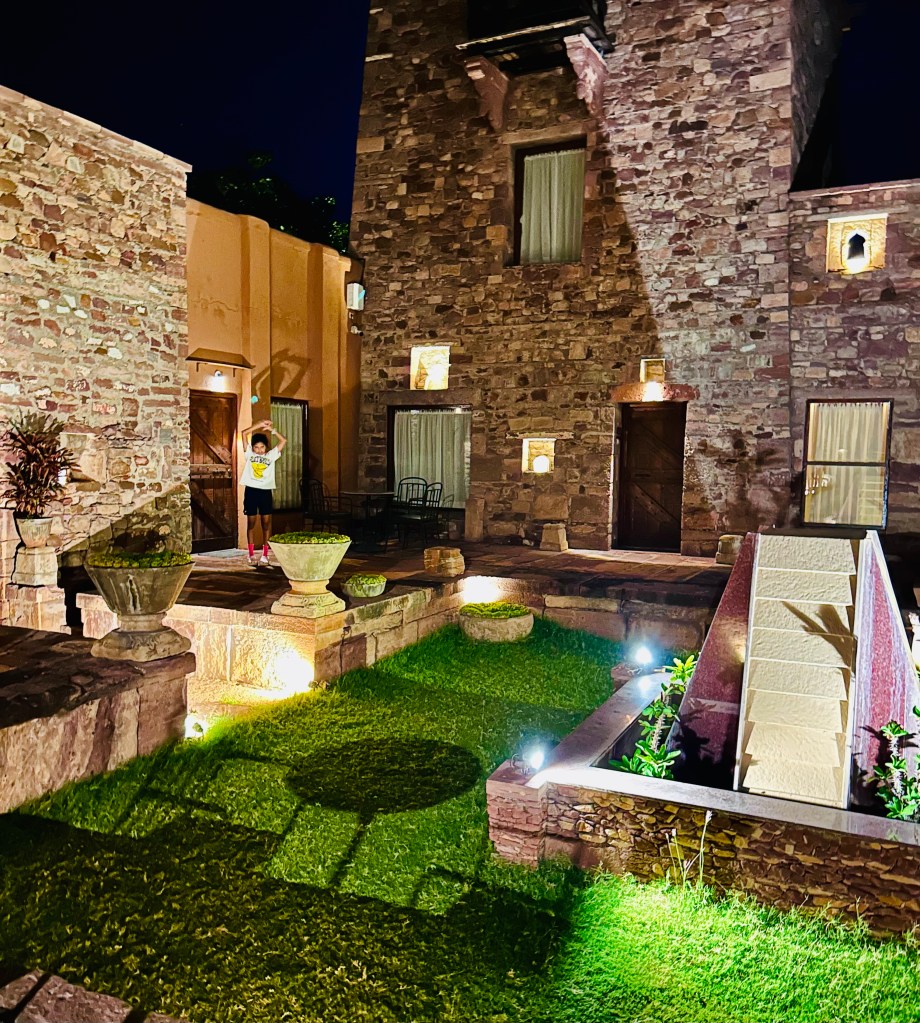
After returning to our hotel, we had dinner and then relaxed outside the room, walking around and enjoying the “royal” ambience here.
Day-2 – Badami, the cave temples and Agastya Lake: A 45-min drive from Aihole, we reach the more recent Chalukyan capital of Badami (Vatapi). The hunt for a breakfast place was bit challenging, finally ending up at Udupi Shree Banashree restaurant. Waiters were super busy, crowd was good enough, so the food should be safe, we thought. Idly is a safe option, and here it felt there was good amount of Urad Dal, not like the rice-heavy idli’s we get in Bangalore. Vada and Chutney were also good, overall, it came to Rs.255, including 2 coffees (too sugary!). We drove another 5 mins to reach the base of the Cave temple complex. As soon as we alighted from the car, multiple gentlemen approached us saying you better do Bhutanatha temple first as there is Muharram celebrations in the afternoon, we will take you in an auto. A guide also approached us and told we could first do the cave temples and then go with the auto guy.
Such historic sites, without a good guide, is pure confusion and aimless wandering, it’s always best to hire a guide. Basavaraj, our guide today seemed to be quite seasoned and professional. He took us through Cave-1 to Cave-4, giving us a blend of unique geography, the rich history, local culture, even the human aspects of this place. He talked about the tourist footfall, plenty of foreign tourists before Covid, but recently many Indian tourists – with a caveat. He said somehow, he hasn’t met anyone from Tamil Nadu. He curiously wondered why Tamilians didn’t visit this place.
Having read some history books recently, I put in my 2-cents – maybe it was the centuries long war fought between the Pallavas and the Chalukyas? He said maybe. He also told although Karnataka has issues with Tamil Nadu, the brotherly bonding with Telangana and Andhra Pradesh is unmistakable. He mentioned that when it was carved out of Andhra, state of Telangana requested for parts of Bidar and Gulbarga to be annexed to it, and interestingly Karnataka government was ready to give it to them. If not for some local protests that happened at Bidar and Gulbarga, the state of Karnataka would have shrunk. That was very interesting news to me, I wasn’t aware of this story.
We walked up the stairs, the monkeys were quite busy at this hour, looking for food, and water in this hot weather. I told Basavaraj that the whole setup looked like Petra Jordan. Although both of us hadn’t been there, he said he thought the same too. He was quite knowledgeable, not just about Badami and the vicinity, but also the far-away places.
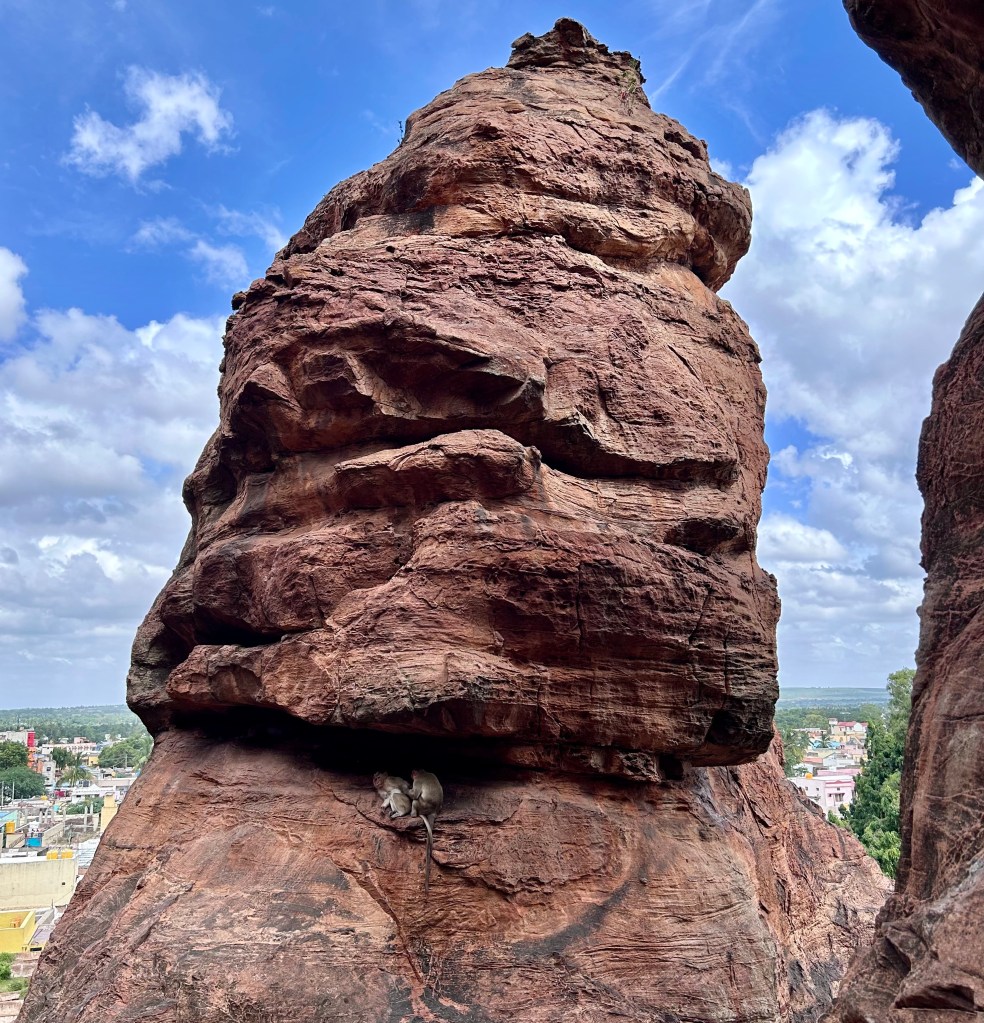
As we walked, he told he worked with Historians and ASI team. He mentioned about Anirudh Kanisetti and his fantastic book “Lords of the Deccan”. I had recently read this book and couldn’t agree more on the significance of the book. Badami got the name because the rocks here were of almond color, locally called Badam. I found out later that the Badami variety of Mangoes gets its name from this historic town of Badami as well.
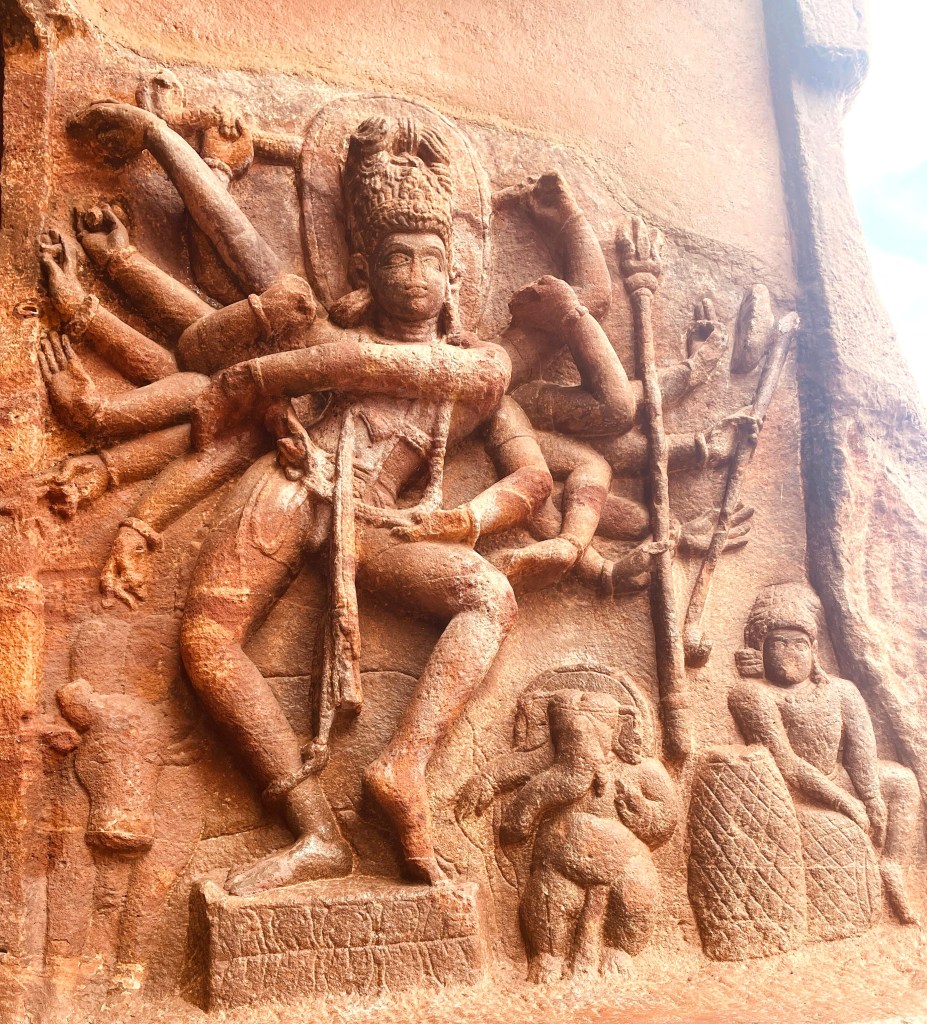
At Cave 1 dedicated to Lord Shiva, there are couple of interesting carvings. First one has to be the dancing pose of the Lord himself. It depicts 9 arms on each side, and each pose (pick one from the right side with one from the left side) represents one complete Bharatnatyam pose, altogether 81 such combinations, simply brilliant I thought. Also seen are Shiva’s sons, Ganesha trying to dance, and Kartikeya playing instrument.
Next up, a carving that depicts a Rishi on the left-hand side (almost a skeleton), folding his arms as he prays to Shiva, with Parvathi next to the Lord. Our guide told this was Brunga Rishi who was adamant that he would only pray to Shiva, not to Parvathi.
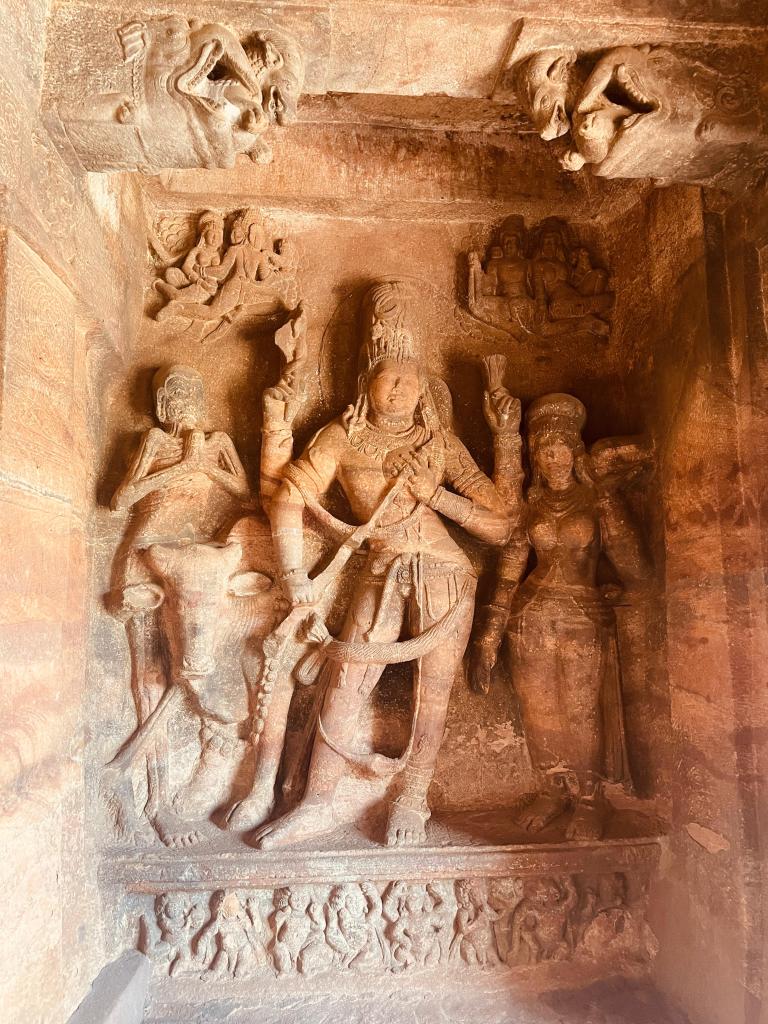
Parvathi removed blood and muscles from his body, and what remained was just the skeleton and skin. The guide explained that it’s believed that we get the skin and skeleton from the father, blood and muscles from the mother. This probably also explains the ageing process I wondered. When we lose muscles as we age, maybe it’s the mother nature taking back? Or maybe the story itself gets derived from the ageing process, where we lose muscles if we don’t respect nature, who knows?
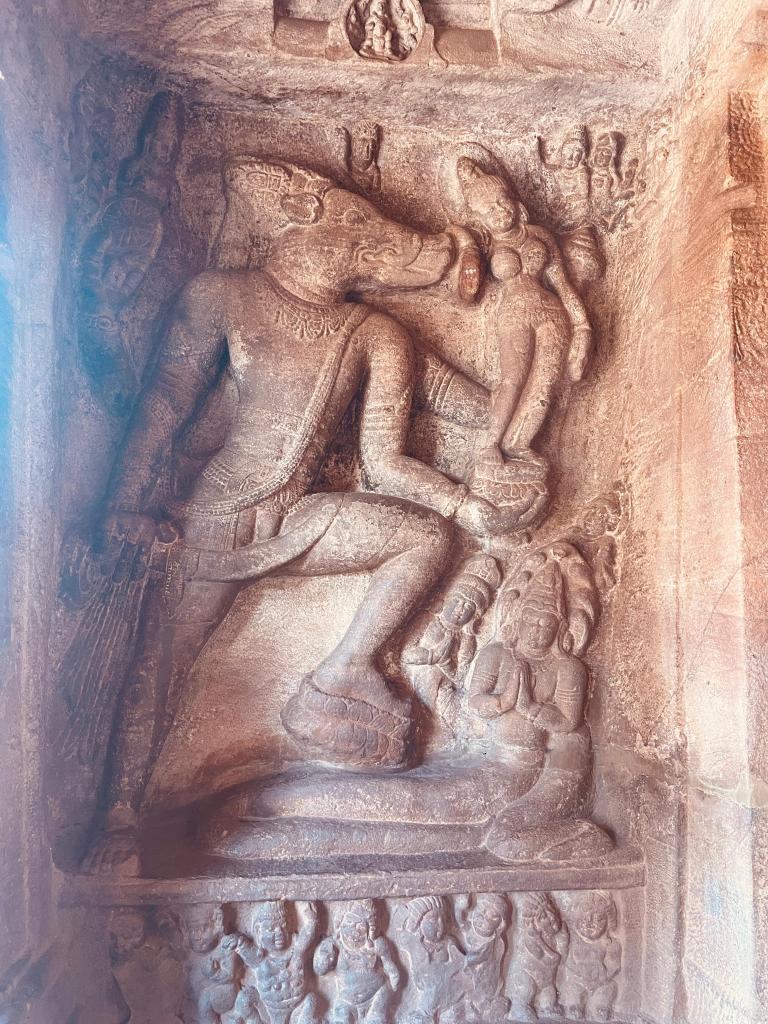
At Cave-2 dedicated to Lord Vishnu, we find a carving of Varaha avatar in hunter pose.
It’s remarkable how they even thought of sculpting a temple out of rocks. Looking from the outside, its a sheer masterclass on monument building.
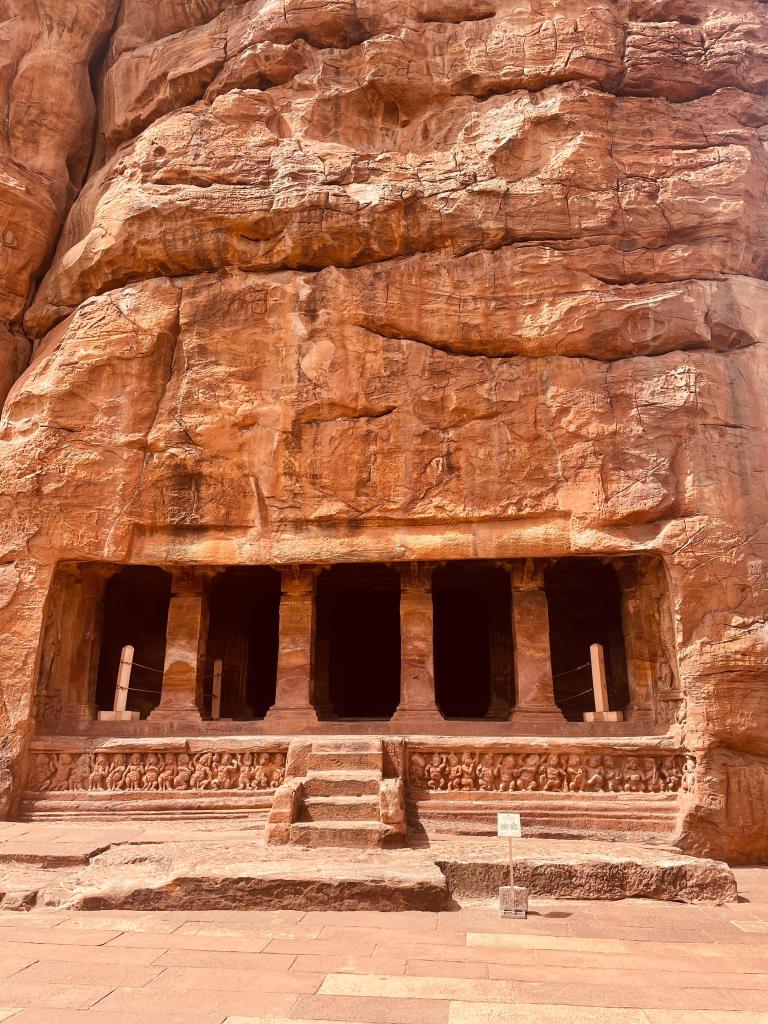
Sandstone rocks are probably easier to carve than Granite ones, but it’s also easy to break, the artisans must have been of top caliber and patience. This set out a new genre of temple building, with the Rashtrakutas going next level with the divine “work-of-god” Kailasa temple at Ellora (This is next on my visit list, naturally).
Cave-3 gets more majestic with same of the carvings of Cave-2 getting scaled up to a much bigger proportion. There is this brilliant carving of Maha Vishnu, seated like a king, with the hallway looking like the majestic court hallway.
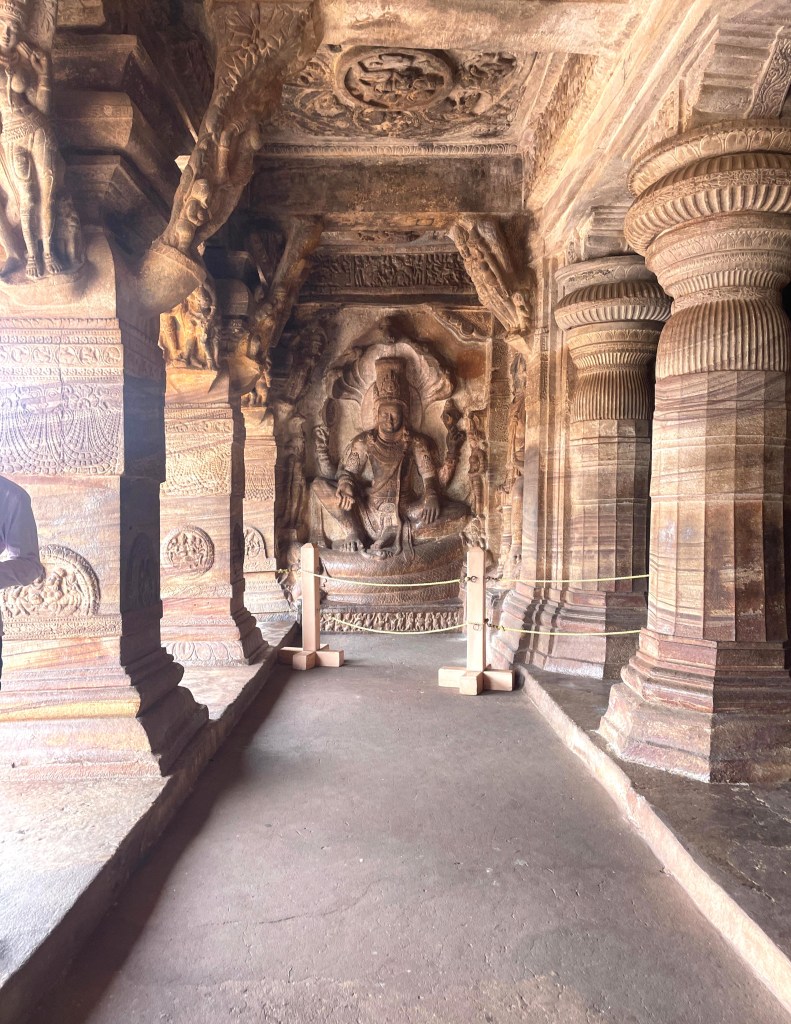
The guide told me it’s rare to find such a seated carving of Lord Vishnu, as most are in the Shesha Shayana pose (Sleeping on serpent). Right next to the Maha Vishnu is the same Varaha the hunter, carved in greater detail and size, truly exquisite stuff this one.
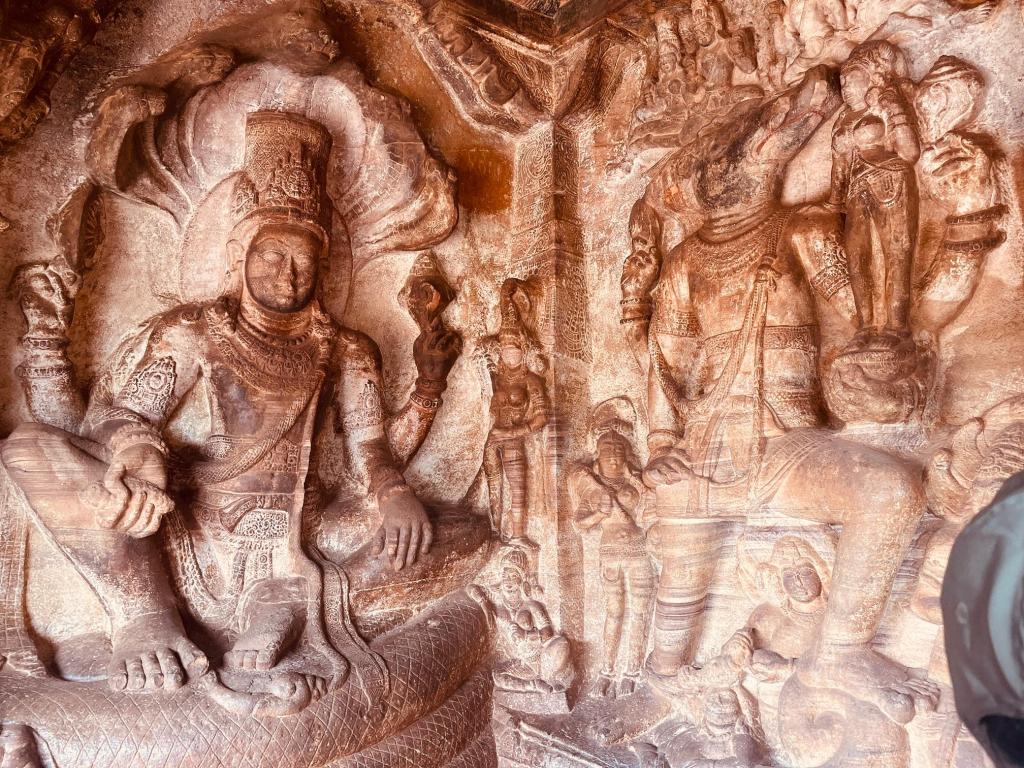
On the other end, there is this beautiful Narasimha Avatar carved, quite majestic! The sheer size and detailing here gave me goosebumps, must have taken years to carve!
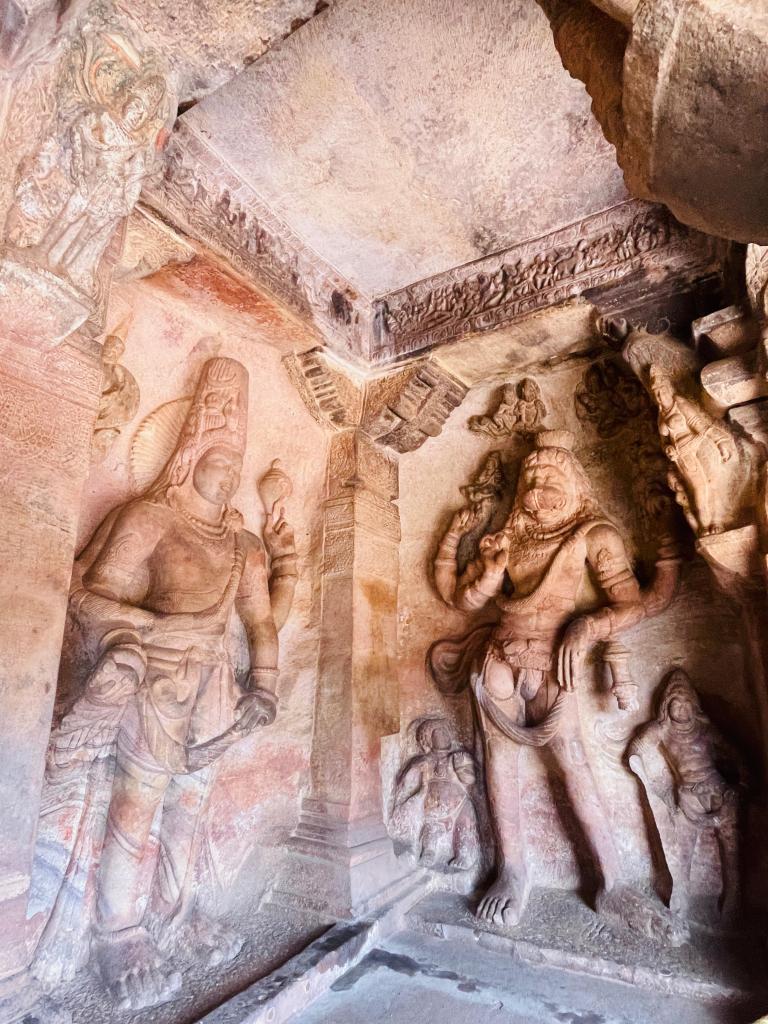
Sadly though, we could not stand longer inside due to the stink caused by the bats. We had this question since yesterday about why the ASI department was not cleaning out these bats? The guide said it’s due to the animal welfare organization who claim the caves are the natural habitats of the bats and we cannot drive them out. I don’t know if they are right or not, but the place did stink! There were probably no such animal welfare protesters during the Chalukyan era.
This cave-3, most stunning of all the caves around, looks like a large movie screen from the outside, I was in complete awe of this entire structure.
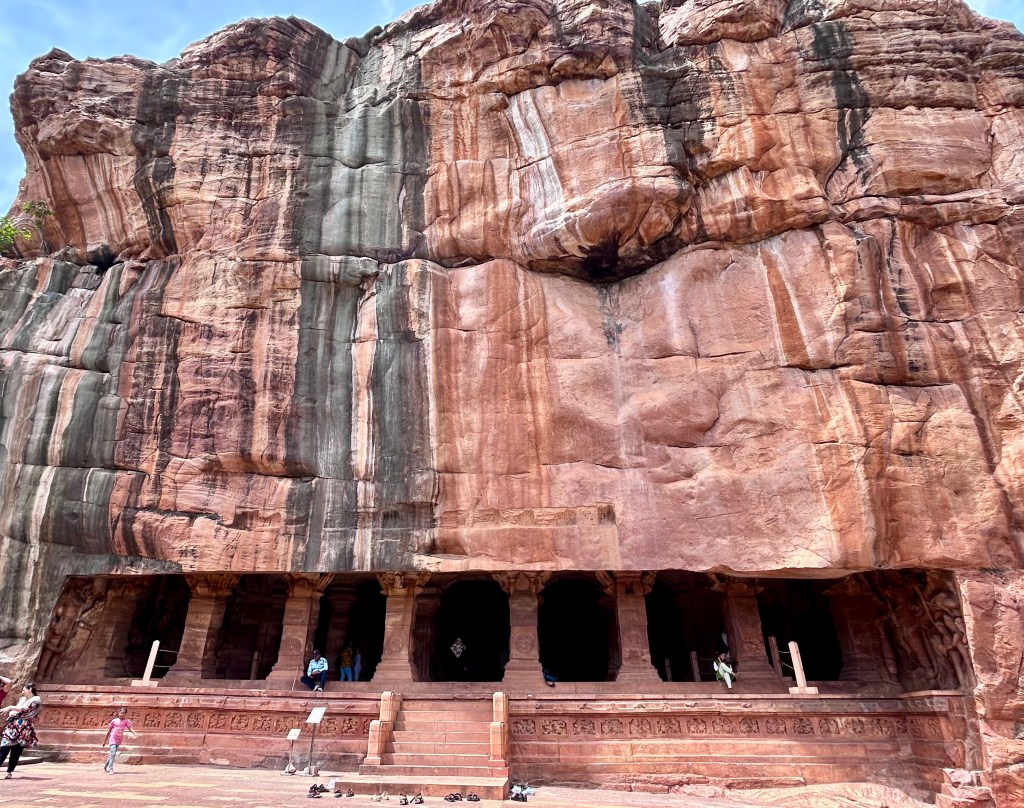
It makes you wonder what tools the artisans used to cut this almost straight line across the sandstone, we are talking about the 6th and 7th century here. One interesting thing the guide did was to make us look up the roof of these caves, which we wouldn’t have otherwise done. There were carvings of Lord Indra, lotus, even Lord Brahma.
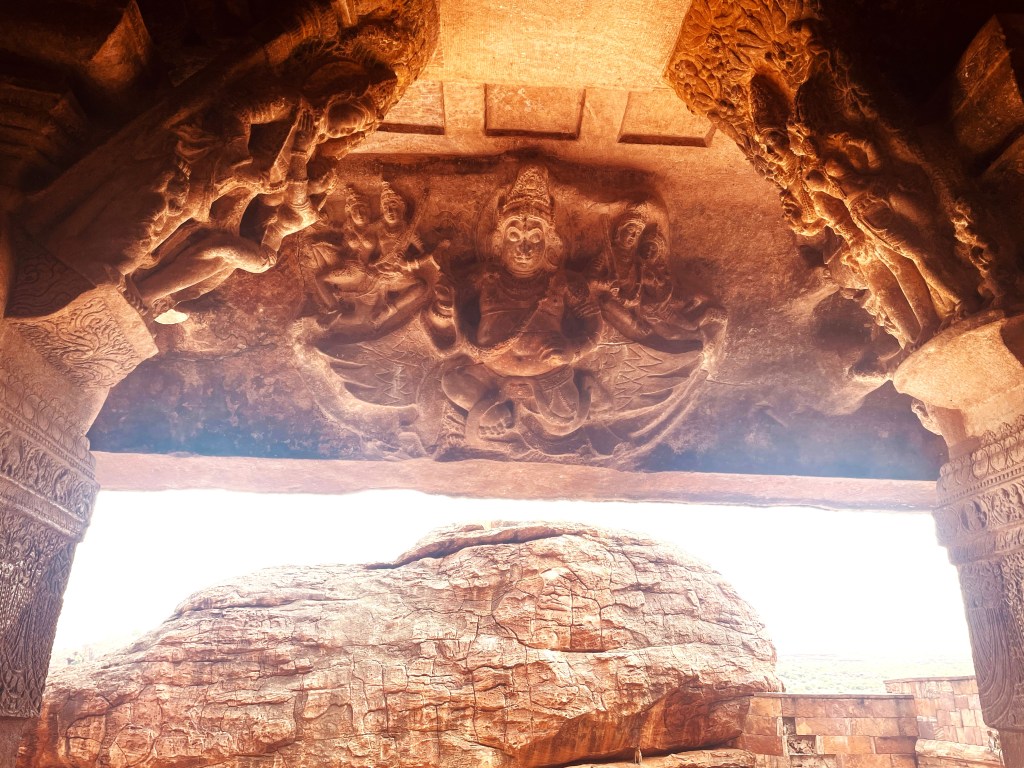
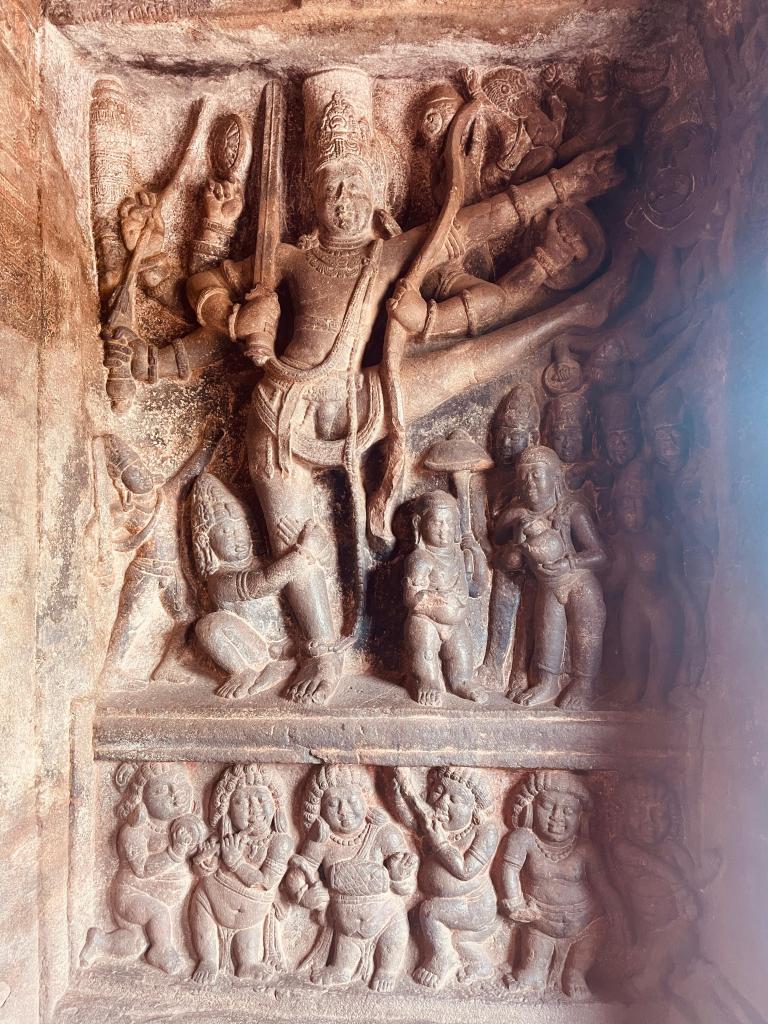
In both the caves, we see the carving of Vamana avatar pushing Mahabali to nether world. Mahabali’s wife Vindhyavali and his son are seen as devotees of Lord Vishnu.
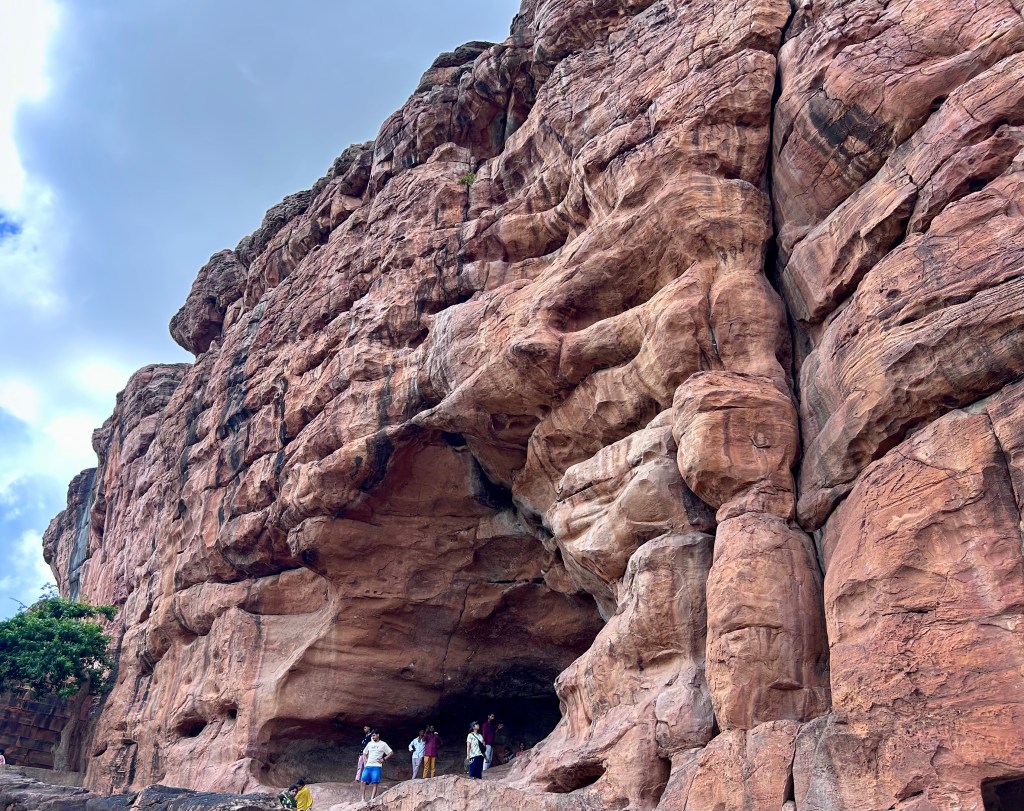
Between the caves, we saw this magnanimous rock formation, simply stunning piece.
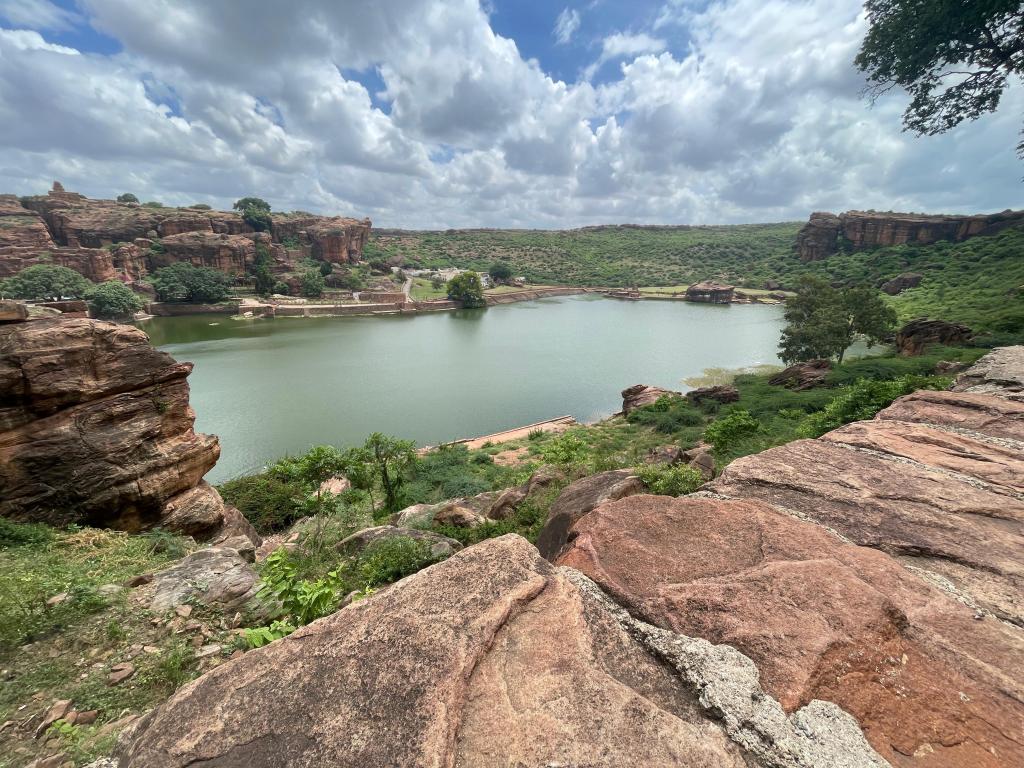
The last cave-4 was dedicated to the Jain theerthankara Mahaveera, who proclaimed that he was to be the last theerthankara. Interestingly, this cave was built much earlier than the other caves, just goes to show us the slow but eventual transition of royal religion from Jainism to modern Hinduism. The views around this place are stunning.
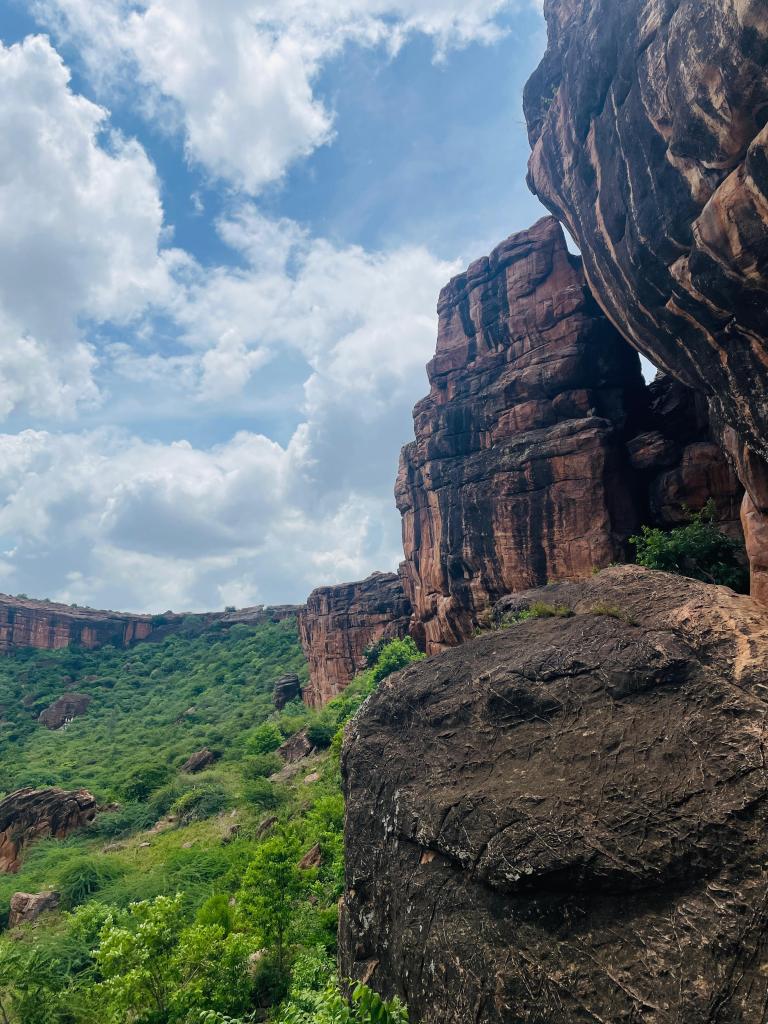
After the cave exploration, we called up the auto, and he took us onboard. Twisting and turning the narrow alleys of the nearby village, we arrived at the museum. The museum was closed today, being Friday, but this was also the start point of the Lower/Upper Shivalaya. There was a guide, I hired him against the advice of my wife. For me, it was less about the knowledge he would impart, it was more about the safety in general. Nice walk up as we enjoyed the canyon structure. First, he took us to the Raja Rani monument, basically a Gali gopura (wind tower), designed for the Royalty to enjoy the cool winds at their leisure. From here we start getting brilliant views of surroundings.
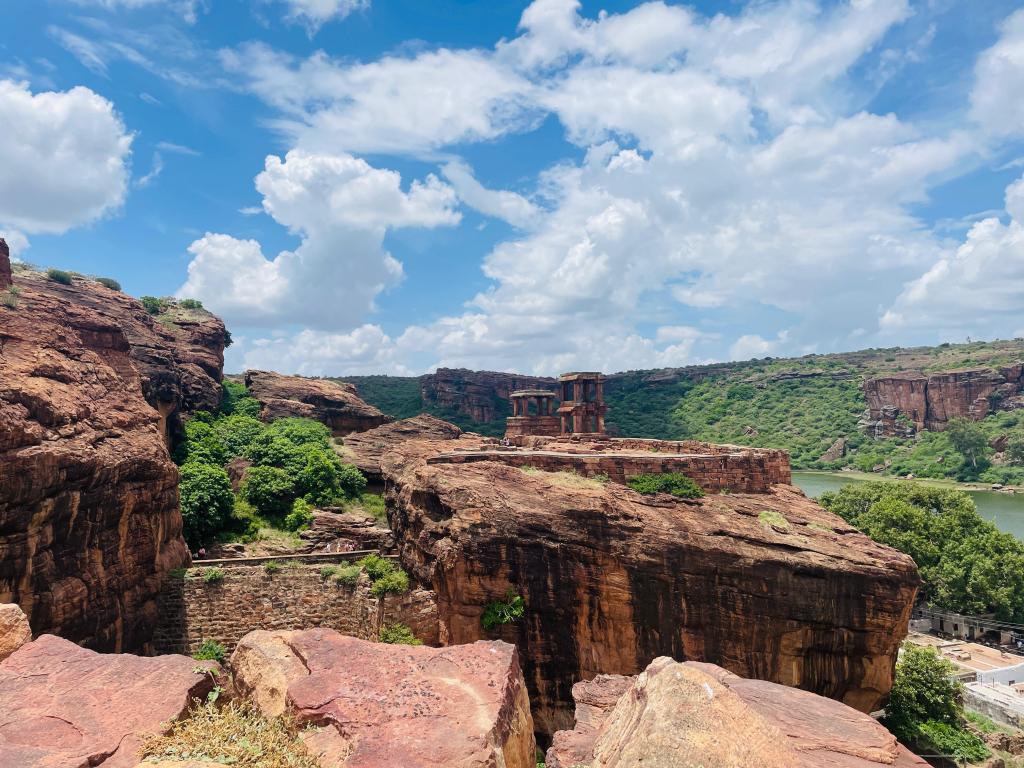
We walked up to the Lower Shivalaya, interestingly Shivalaya could also be a Vishnu temple, with Shivalaya being used a generic term for a temple, apparently.
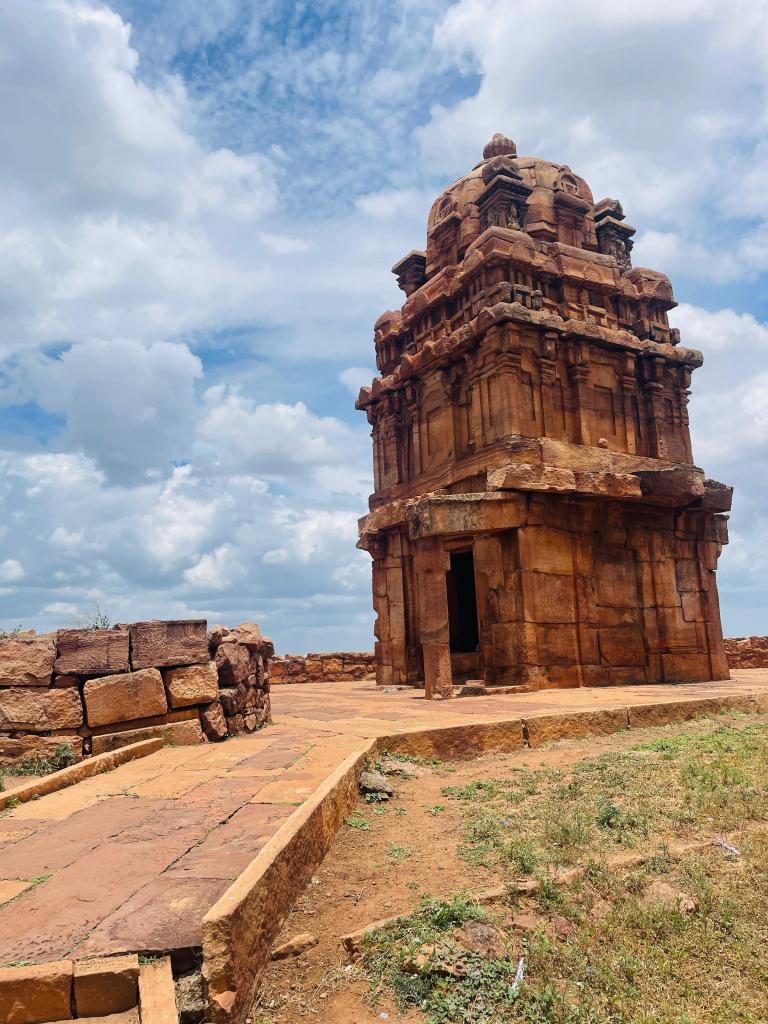
Still further on the nice hike up, we see the Tipu fort, his prison and Tipu drop (It seems Tipu was quite fascinated about “dropping” his prisoners). Further up we can find the granaries and apparently the site of Royal Palace of Pulakeshin II. Having read so much history about Pulakeshin, it felt surreal to be standing on the ground where the great Monarch might have stood. Finally, there was the upper Shivalaya. The guide asked to join for sunset trek on top of Badami south hill, it would start at 4:30pm. Although it seemed very enticing, we skipped it mostly because of tiredness.
We called up the auto driver, he brought us to the legendary Bhutanatha temple, the iconic monument of Badami. This auto thing is almost a scam, it’s probably only 1km walk if we directly walk, rather than going through village alleys, and they charged us Rs.500/- to and fro. But if you consider the heat, chaos, the unknowns and as primary source of income for these people around, then it doesn’t feel so bad actually. This especially doesn’t hurt once we set eyes at the majestic lakeshore temple, a 7th century Shiva temple built out of sandstone. Its brilliant, simply brilliant.
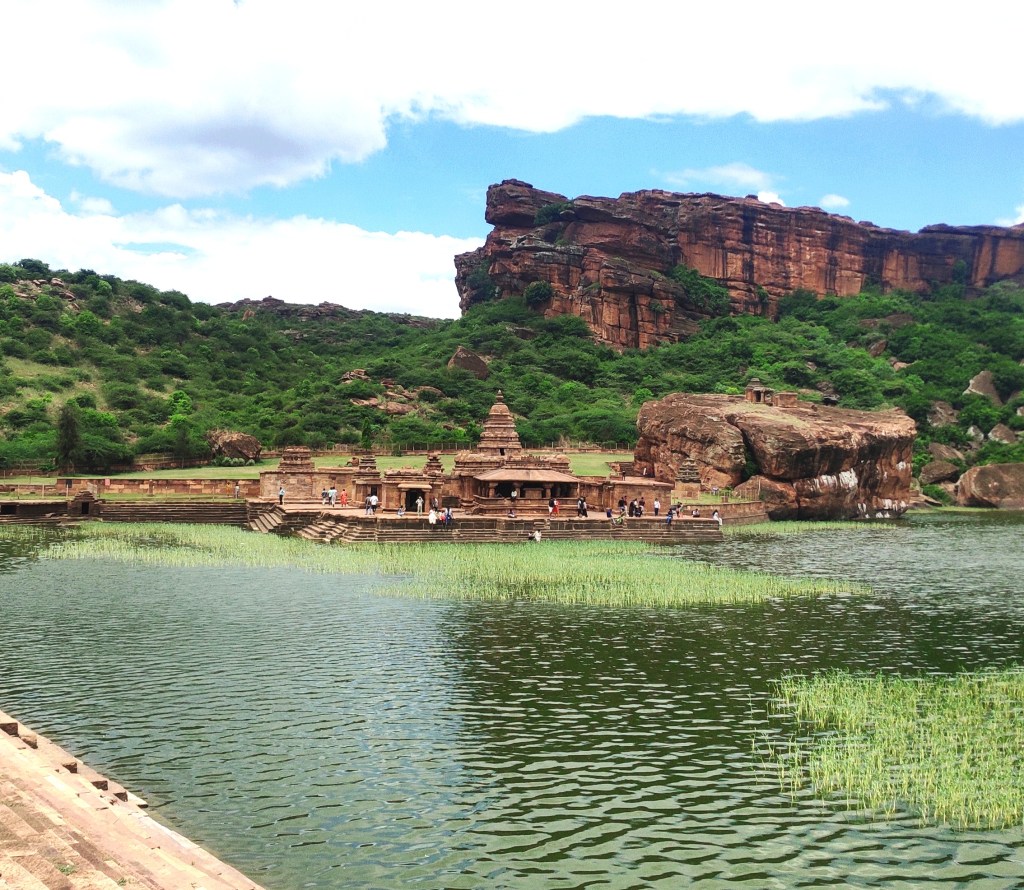
We walked around and inside this beautiful Shiva Shrine, further there is a nice place to sit and relax by the lake, several intricate carvings along the way.
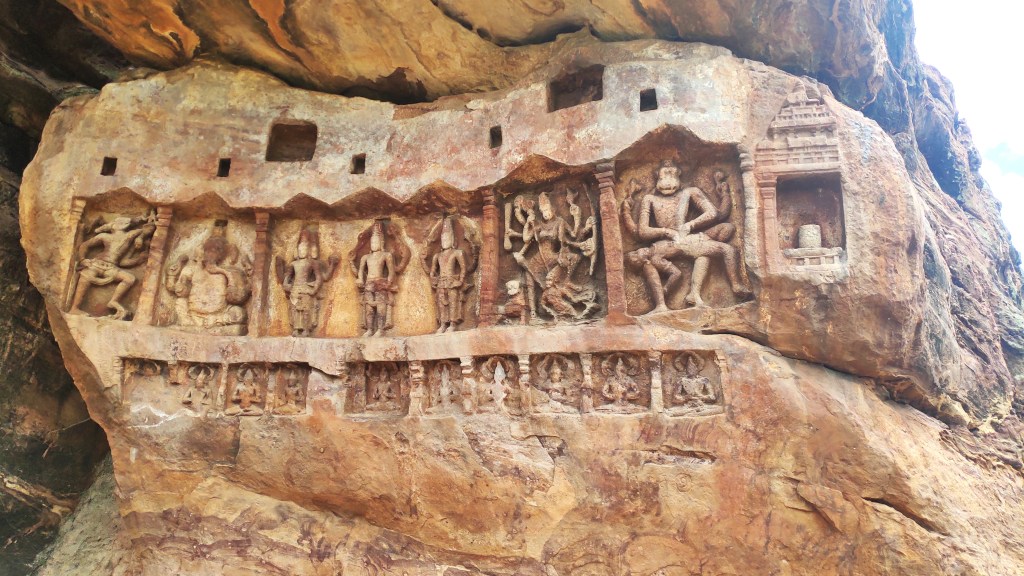
After returning to the cave temple parking, we looked for lunch options and decided to have Lunch at Veerabhadra Khanavali based on the google reviews, but we found it was just OK, hygiene seemed questionable to us. Nice drive back from Badami to Aihole, roads are really good around here. We bought roti + curry near the Pattadakallu, which is on the way, for just Rs.85. After coming back to Wada1, we relaxed for a while, and later at 6:10pm walked up to Meguti Hills, so stunning and adorable in the golden hour. The walk up to this temple itself is so nice.
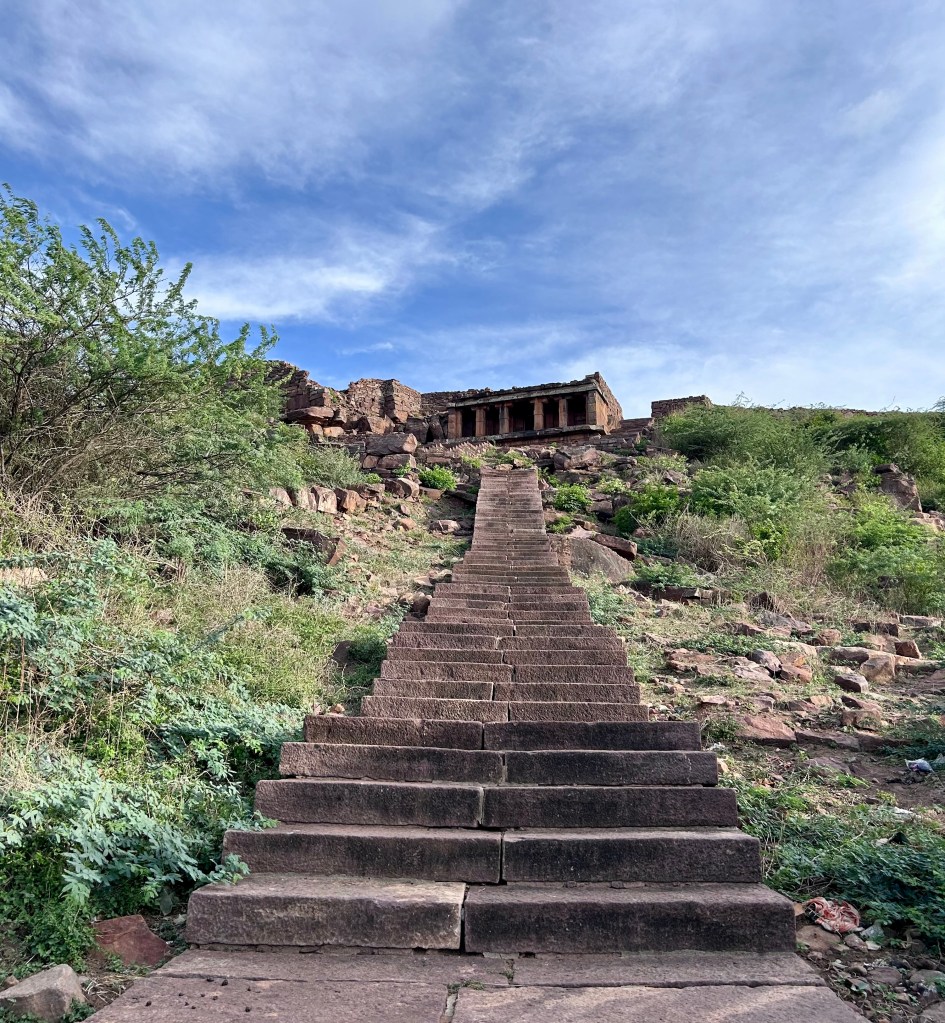
Without a doubt, this is a must-visit place at Aihole. Luckily, monkeys weren’t around at this time of the day. My wife and I had some peaceful moments at the hill. We walked down and back to Wada1, had roti’s, protein bars, and walked around the property. We sat on the table setting outside and went to sleep. Another day well spent!
Day-3- Pattadakallu – the coronation stone: Meguti hills called us again this morning (yes, for the third time!), a short hike up and we reached by 5:50am, we heard from the hotel manager that sunrise was beautiful here. Although the overall environment at this early hour was serene, the sunrise wasn’t as glorious as we expected. We walked down and checked on some of the temples we had missed. Be wary of open defecation around this place, in the morning time – Plenty of folks walking to their nearest potty spot with a pail or mug. We freshened up at the hotel, today was to be the visit to the UNESCO world heritage site Pattadakallu, the place where kings got coronated. We reached around 9am. Parking costs Rs.50, we crossed the road to a smallish eatery to have some poori bhaji, it was decent. Entry to the heritage site is Rs.35 per person.
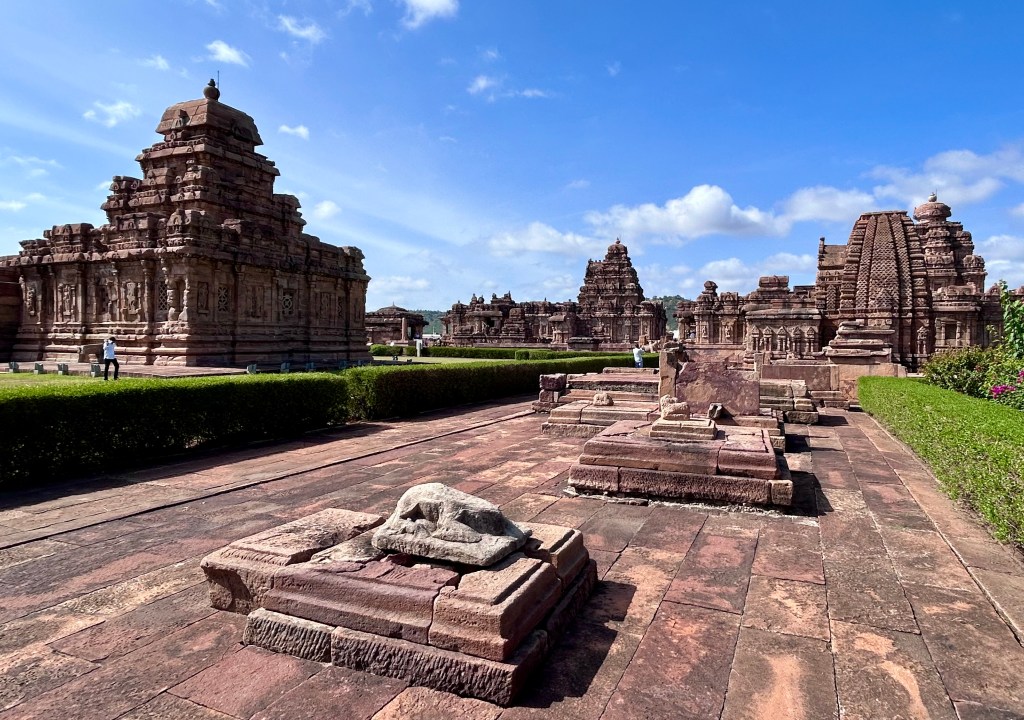
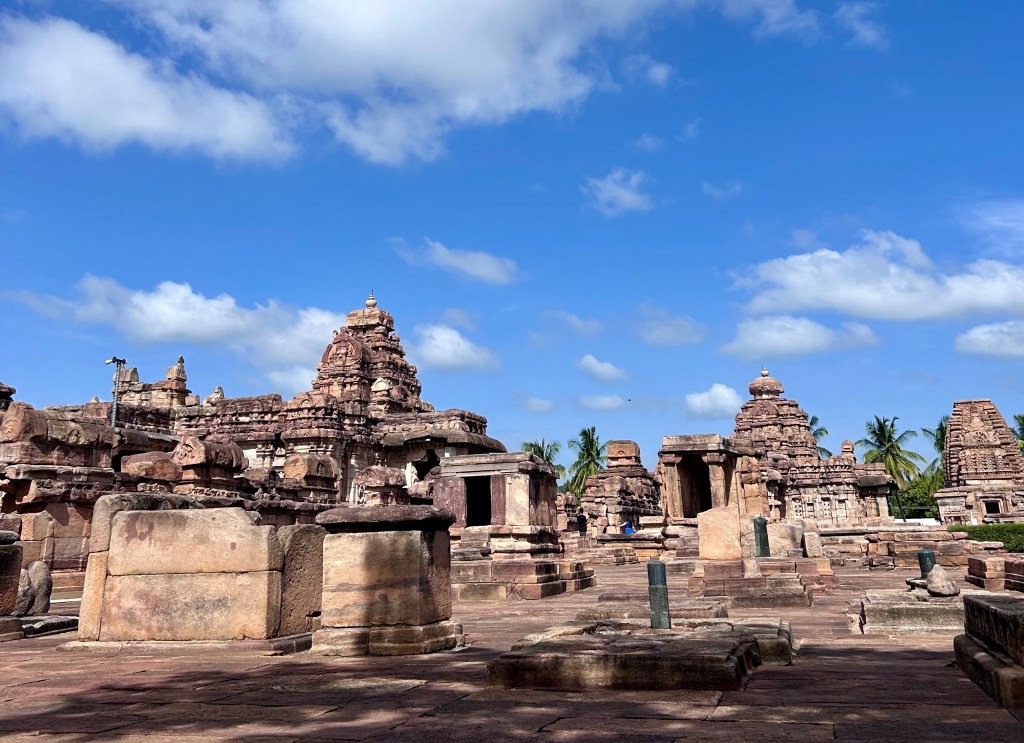
Thanks to the UNESCO tag and funds, this is a very well-maintained heritage site, home to some incredible temples. Sangameshwar temple had some impressive architecture.
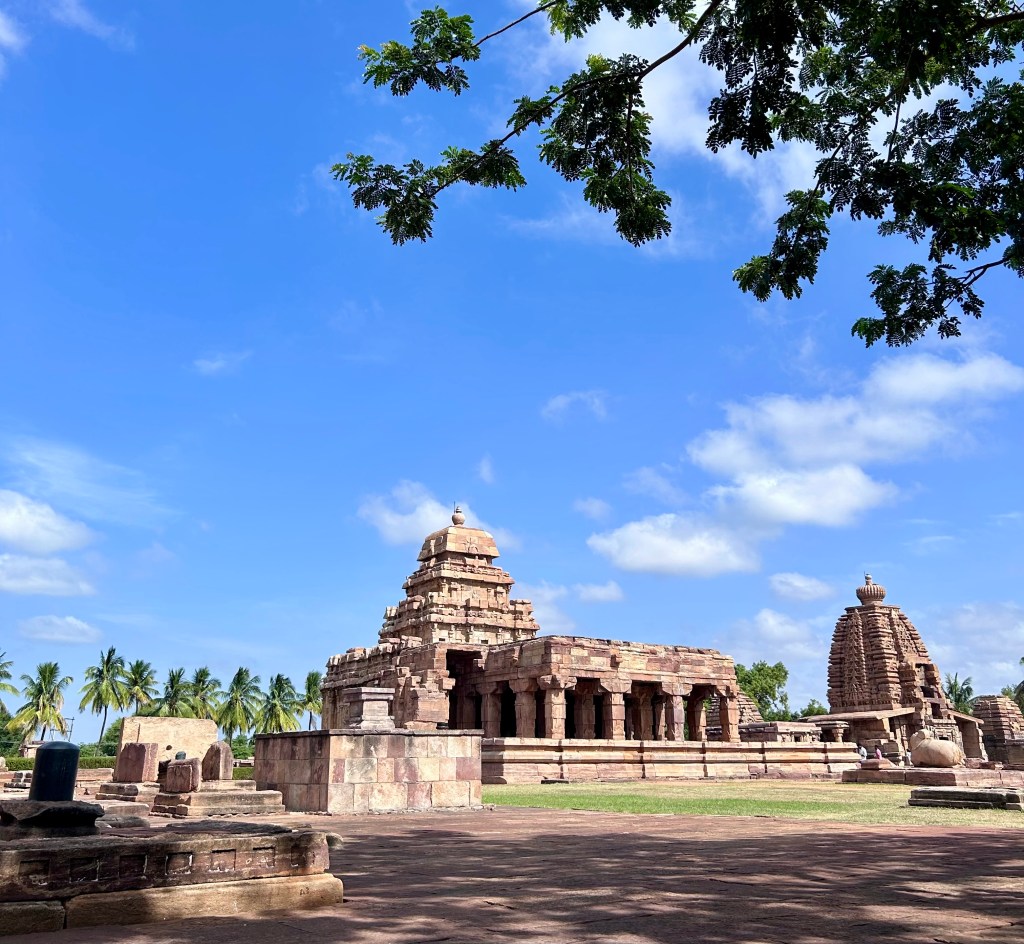
Mallikarjuna temple was beautiful. Nandi and the main Linga at Virupaksha, the only functional temple was truly divine, we felt a sense of calm here. Galaganatha temple was an interesting fusion of North and south temple architecture.
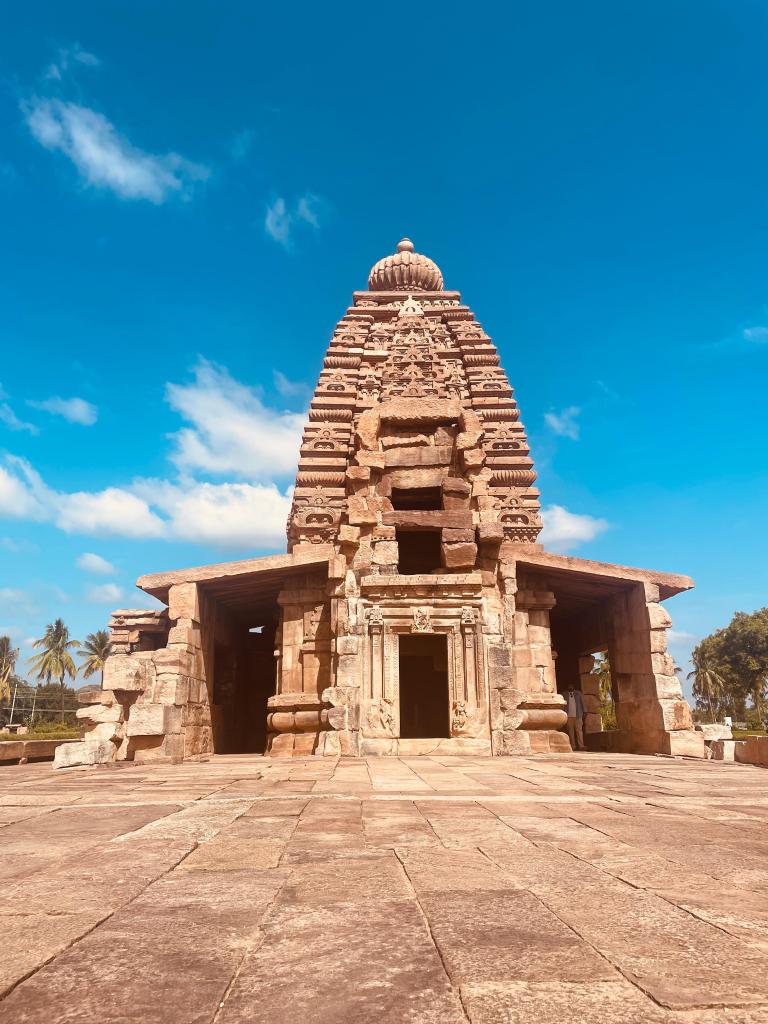
We spent around an hour in this temple complex, it was noon time and hot, but we enjoyed the experience, nevertheless. We drove next to the Banashankari temple, my wife really wanted to visit this religiously important temple in this part of the world. Roads after taking deviation from the main road were quite bad, but temple parking was good. Temple is very famous, as we could see by hundreds of devotees. We got our darshan quickly without much waiting, good to visit if you are around.
For lunch, we drove all the way to Bagalkot town, to experience proper North Karnataka style meal at Jawari by Pakwaan. The meal costs Rs.225, overall good stuff. We were the first ones to arrive at 12 noon. Sweet dishes got served first, followed by rotis and curries, I enjoyed it very much. We wanted to visit the Muchakandi dam, but somehow, we weren’t able to find the right entrance to it, so we skipped this and went to Kudalasangama, the famous confluence of Krishna and Malaprabha rivers. The shrine at Sangama is designed very uniquely, stairs to go up, stairs to go down, both alternating, giving a feel of having to walk twice the level than we eventually have to.
My daughter was very accommodative throughout the trip; it was hot and generally lot of walking around. I always feel it’s a blessing to have her as our daughter. These are the realizations we get when travelling together as family, the likes, dislikes, adaptability, enthusiasm to experience something different, not necessarily the one we hope for. She enjoyed the heritage hotel, so once we announced we were now going back to hotel after the Kudalasangama visit, she heaved a sigh of relief.
Just before we reached the Durga temple complex, we stopped to visit one final place at Aihole, the Hucchimalli temple, another brilliant temple standing isolated, left to ruin, with people having no qualms in getting their cattle to graze inside the campus.
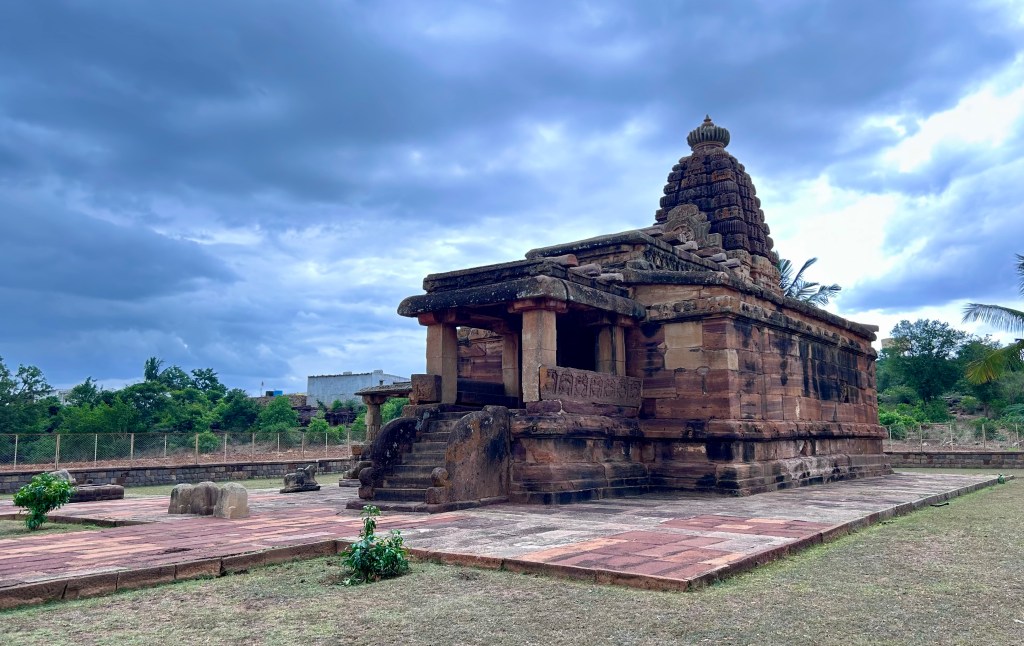
It’s difficult for ASI to protect without getting help and support from the locals. We reached Wada1 by 5pm and relaxed for a while. At 7pm, we went to the hotel root top to experience some brilliant colors of the sky during sunset, accompanied by slight drizzles. Hopped to bed and played “Ek Machli” game and dozed off by 9pm.
Next day morning we drove back to Namma Bengaluru. The trip overall was completely worth its money and I highly recommend history lovers to take a trip down the history lane at these magnificent triumvirate of Chalukyan towns. Pattadakallu is already a UNESCO world heritage site, so it will continue to remain protected. Our guide mentioned they have requested Badami to be under the UNESCO heritage protection, he was fairly confident about getting it, this would be fantastic. I am worried about Aihole though. Although ASI has tried its best, all the places other than Durga complex have been left to ruin. Aihole has amazing potential for development in terms of stay options, decent restaurants, tourist guides and protection in general. This has to of course take the local population into confidence and work towards greater good for everyone. Too much tourism is also bad, so we walk a tight rope here, let’s just hope for the best.
Discover more from Keep it simple, stupid.
Subscribe to get the latest posts sent to your email.


This was a fascinating read, especially the way you combined your personal family experience with the history of the Chalukyan kingdom. I really enjoyed the journey through Aihole, Badami, and Pattadakal, and your descriptions of the cave temples and intricate carvings made the heritage sites come alive. The idea of visiting Aihole, Badami, and Pattadakal in that order to understand the evolution of Chalukyan architecture is particularly interesting. It’s also great to see the importance you place on preserving lesser-known heritage sites like Aihole. A wonderful travelogue for anyone interested in Karnataka’s history, architecture, and culture.
LikeLike
Thanks a lot, Deeba, for your message! I am delighted that you enjoyed my travelogue!
LikeLike